As a fish lover, I had always wanted to visit a wholesale fish market to see what goes on behind the scenes. So when I came across a guided tour of Jurong Fishery Port organised by Hidden Heritage, I immediately signed up with a few friends.
The 1½-hour tour was scheduled to start at 11pm and end around 12.30am. We rented a Tribecar and drove all the way from Punggol to Jurong Fishery Port, practically from one end of Singapore to the other.
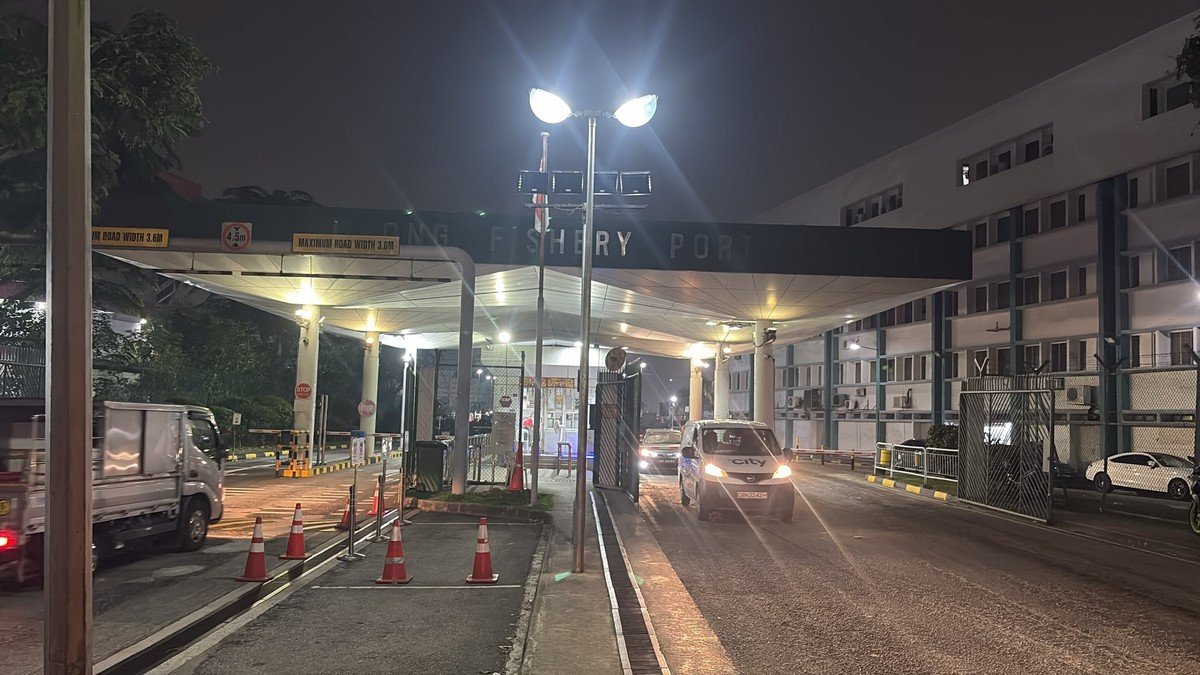
Upon reaching the main gate, all passengers had to get out of the car and scan their NRIC barcode using the Singpass app at the gantry before being allowed in. Even before we entered the complex, we could already smell the familiar fishy odour.
Jurong Fishery Port is a sprawling complex consisting of three main built-up areas. The first is a five storey building housing the fish merchants’ offices. The second is a large sheltered wholesale market where most of the fish trading takes place. The third is a smaller sheltered area accommodating traders who relocated from Senoko Fishery Port.
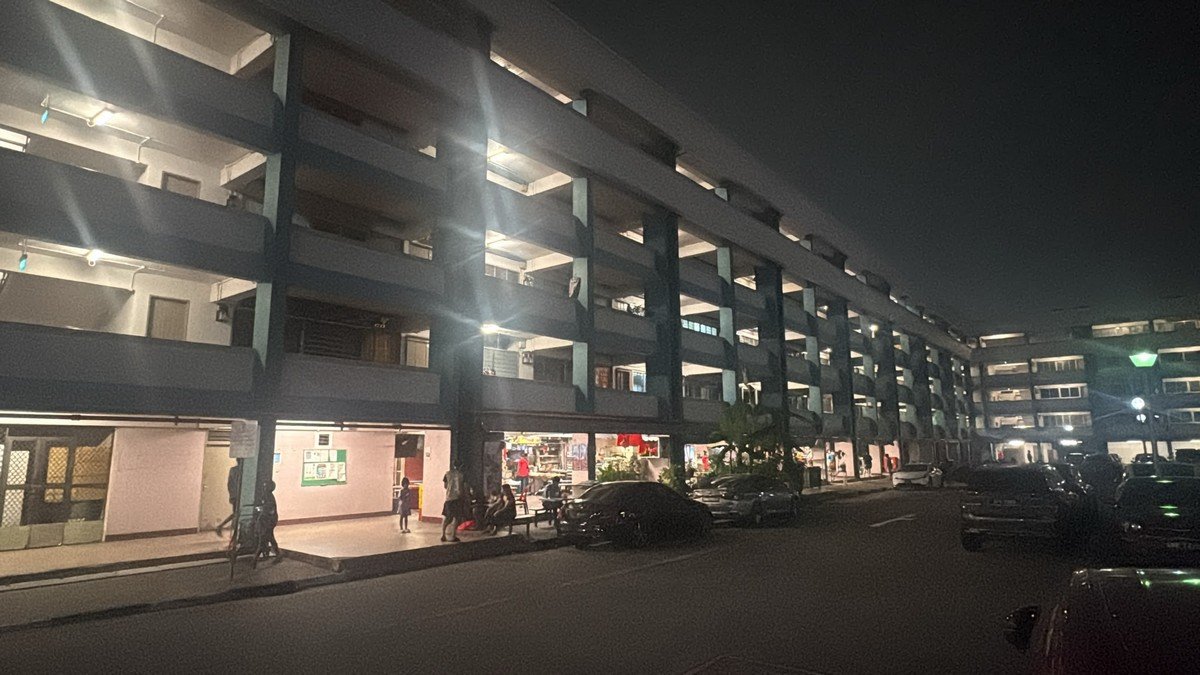
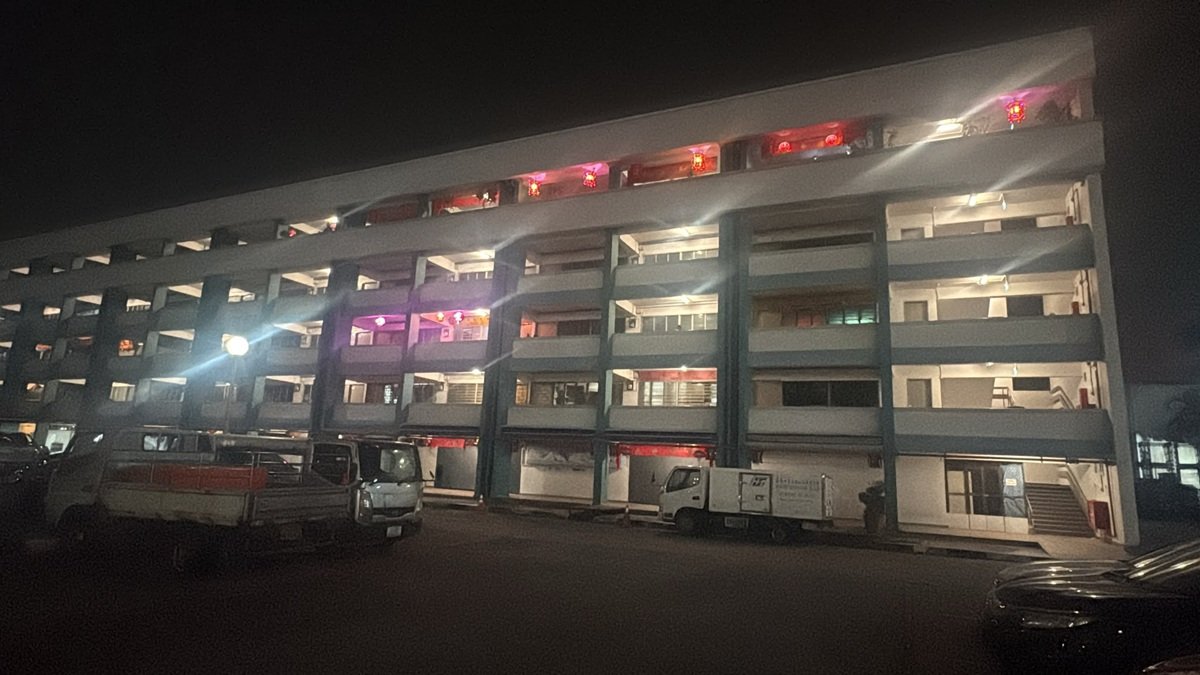
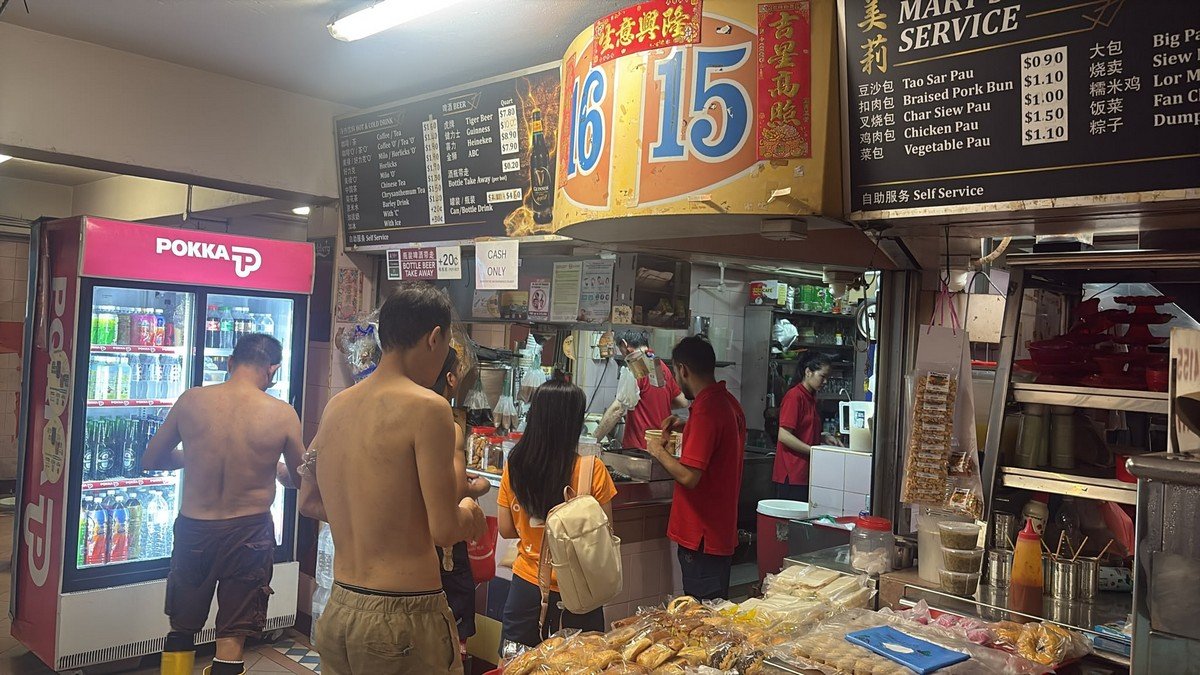
We headed to the coffeeshop on the ground floor of the merchants’ office building, where we were supposed to meet our guide. There were close to 20 participants that evening, a mixture of families, groups of friends and individuals.
Our guide was a young handsome chap who introduced himself as a fish fanatic, someone who seemed to love just about anything related to fish. Given the subject of the tour, I suppose we could not have asked for a more enthusiastic guide.
Exploring the Fish Merchants’ Offices
We began by exploring the merchants’ office building. The building was arranged in a U-shaped layout, with the various wings surrounding an open car park. Somehow, the arrangement reminded me of my old army camp, where the Alpha, Bravo and Charlie Company blocks surrounded the parade square.
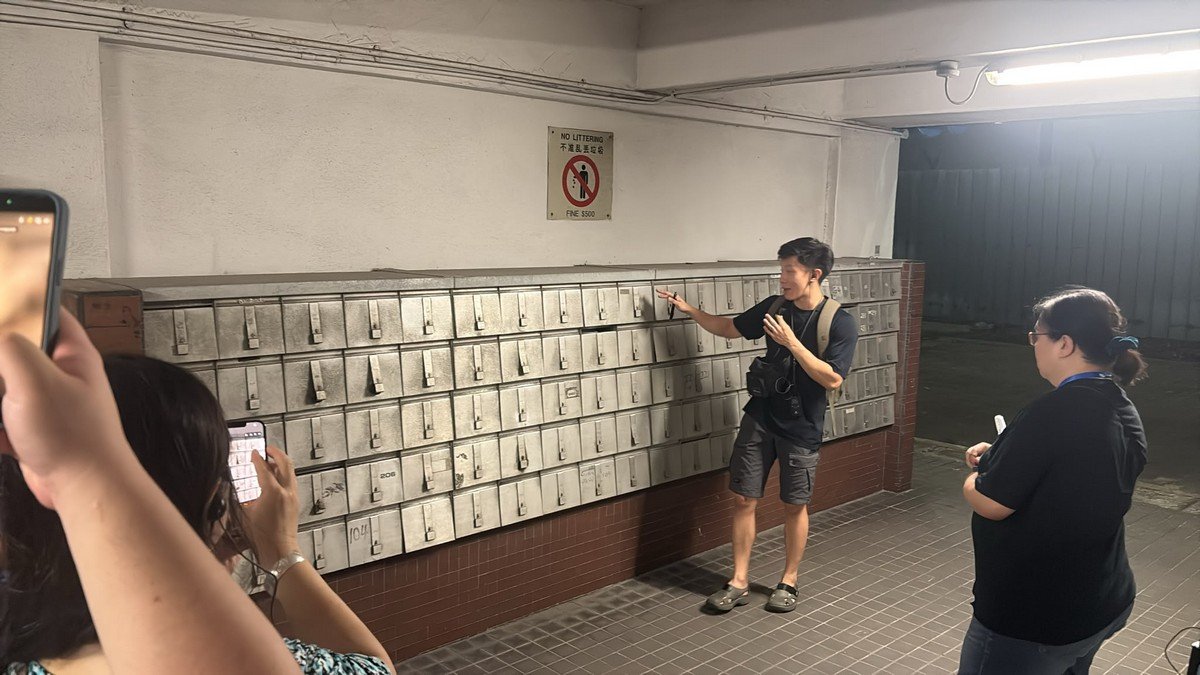
One of the first things our guide showed us was a row of old-fashioned metal letterboxes. These were the type that made a loud clanging sound whenever someone opened or shut them, particularly when distributors came around to stuff advertising leaflets into the boxes. It was a small detail, but one that brought back memories of an earlier Singapore.
We then climbed to the top floor, which offered a bird’s-eye view of the entire fishery port complex. From the corridor, we could also look into some of the merchants’ units.
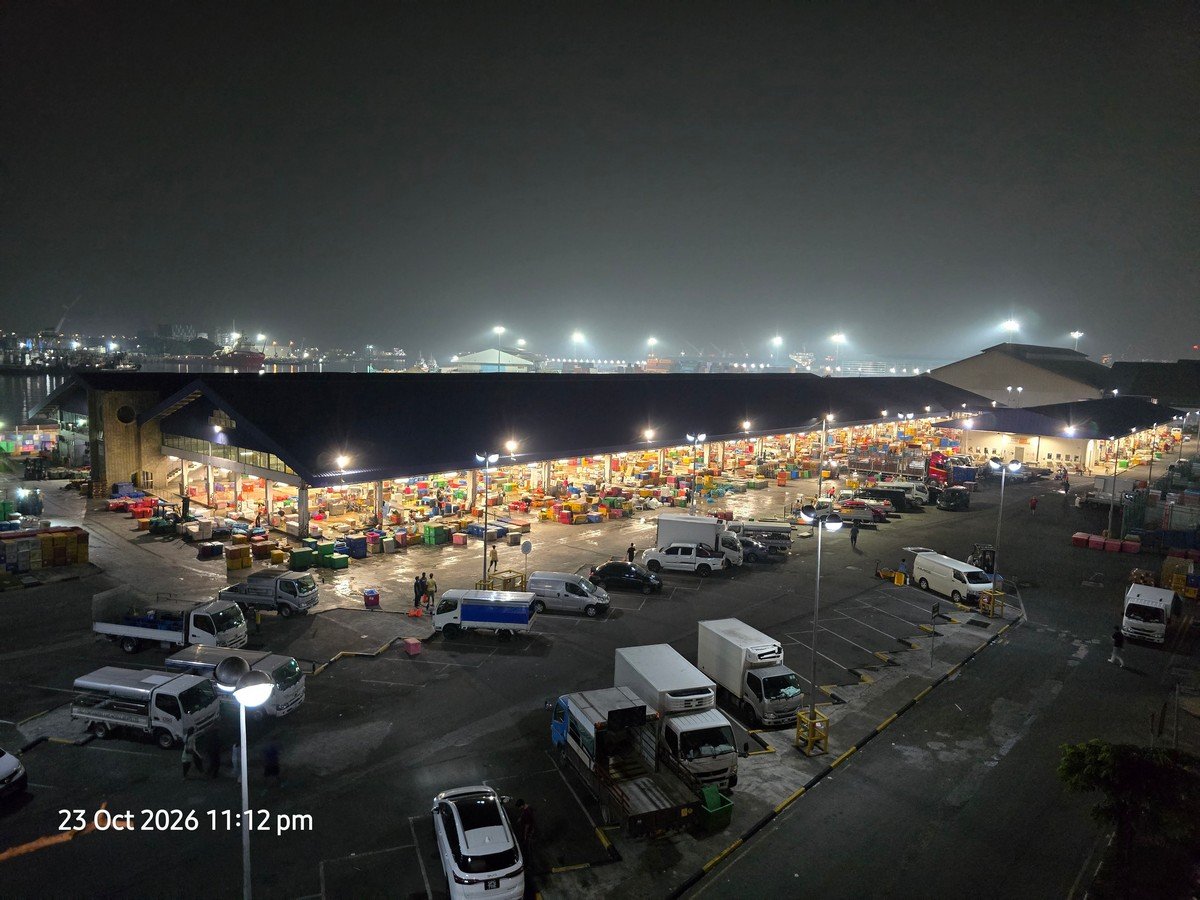
According to our guide, there are more than 130 fish merchants operating within the port. I suspect that only the older or more established merchants maintain offices in this building, although I could be wrong.
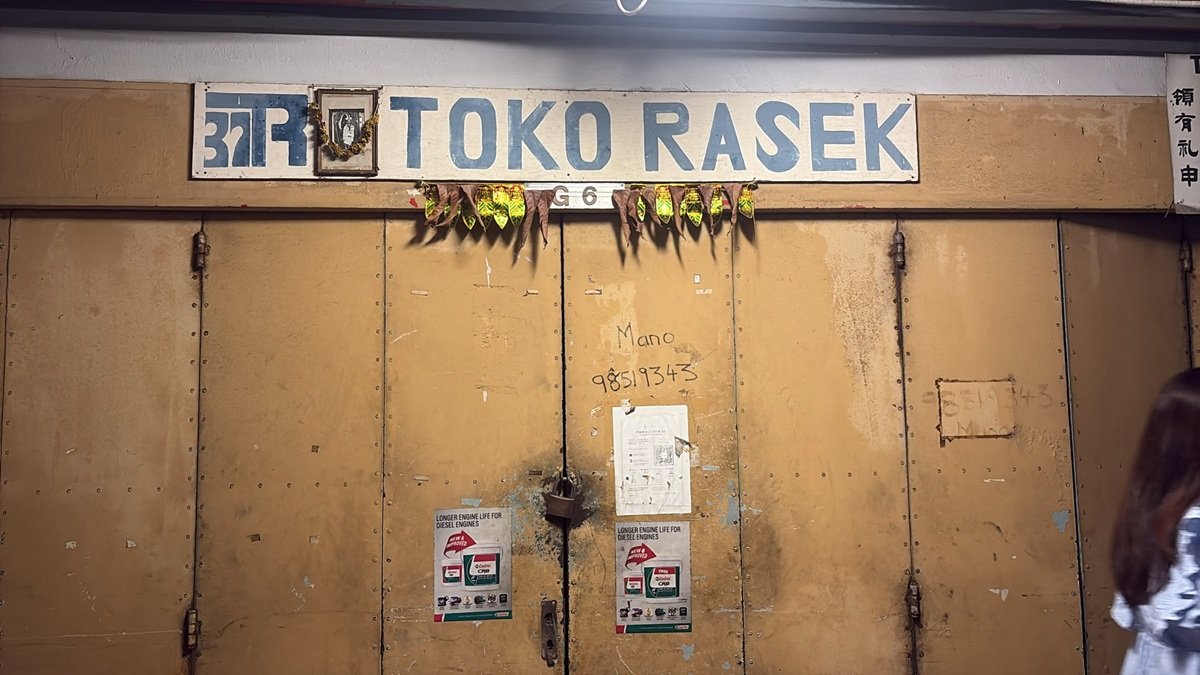
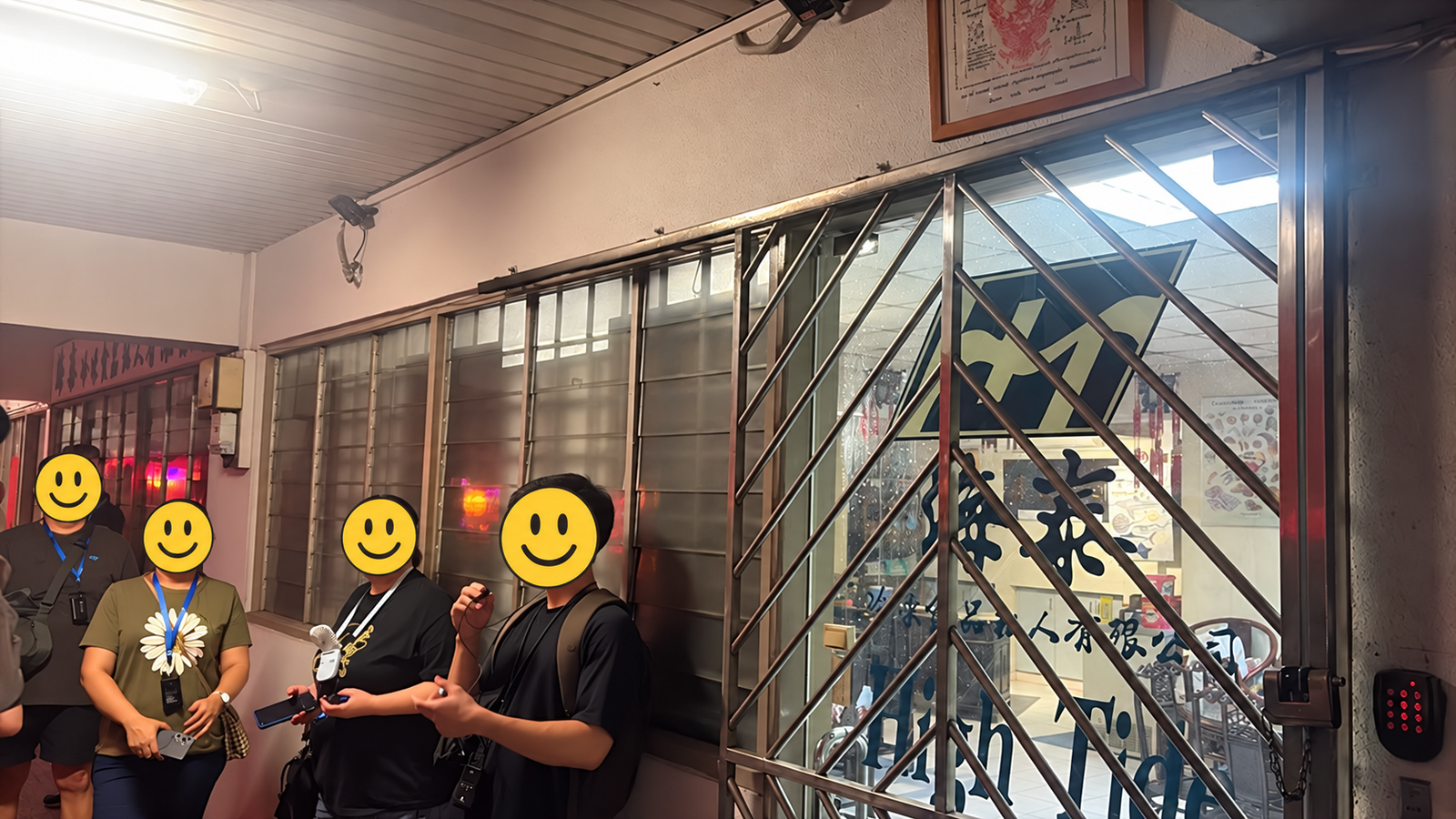
What surprised me was that many of these units looked more like residential apartments than business offices. Instead of the usual office desks and workstations, some were furnished with sofas, coffee tables and other living-room furniture. Perhaps this is not surprising, considering that much of the wholesale fish trade takes place in the middle of the night. For the merchants, these offices probably serve as places to rest, entertain visitors and conduct business.
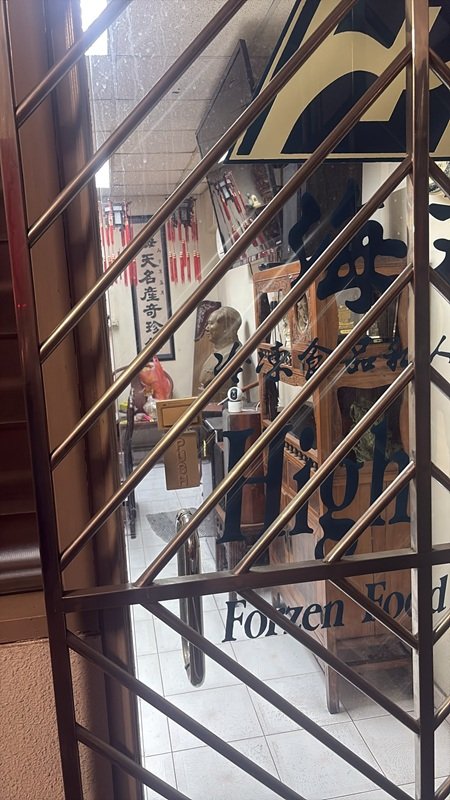
One particular unit caught my attention because it had a statue of Mao Zedong prominently displayed inside. According to our guide, some of the older fish merchants held Mao in high regard. Apparently, one elderly merchant could even recite passages from Mao’s Little Red Book from memory. It was an interesting reminder of the political and cultural influences that shaped an earlier generation of Chinese businessmen in Singapore.
The Singapore Fish Merchants’ General Association
We continued along the corridor until we reached the premises of the Singapore Fish Merchants’ General Association (新加坡鱼商总会), located in the central section of the building.
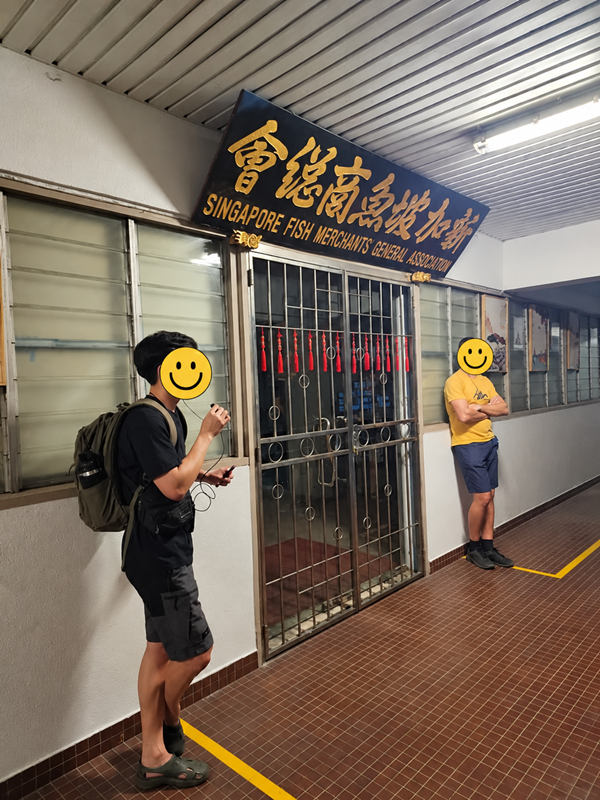
The association was established in 1969, around the time when fish merchants from the two old wholesale markets in Singapore’s 大坡 and 小坡, commonly referred to as Greater Town and Lesser Town, relocated to the Jurong Central Fish Market.
The association played an important role in bringing the merchants together at their new location. Apart from representing their collective interests, it also helped mediate disputes among traders, which were probably inevitable in such a competitive business.
Today, according to our guide, the association’s premises also serve as a social gathering place where older merchants meet to drink tea, chat and play Chinese chess. It is rather nice to know that, amid the hustle and bustle of the wholesale fish trade, there is still a place where old friends can gather and maintain relationships built over decades.
Our guide also mentioned that a double murder took place in the office building sometime in the 1980s. It was an unexpected and rather intriguing piece of the port’s history, although I have yet to look into the details of the case.
A Small Shrine Dedicated to Mazu
After exploring the merchants’ office building, we made our way to the back, where there was a small shrine dedicated to Mazu (妈祖), the Chinese goddess of the sea and protector of fishermen and sailors.
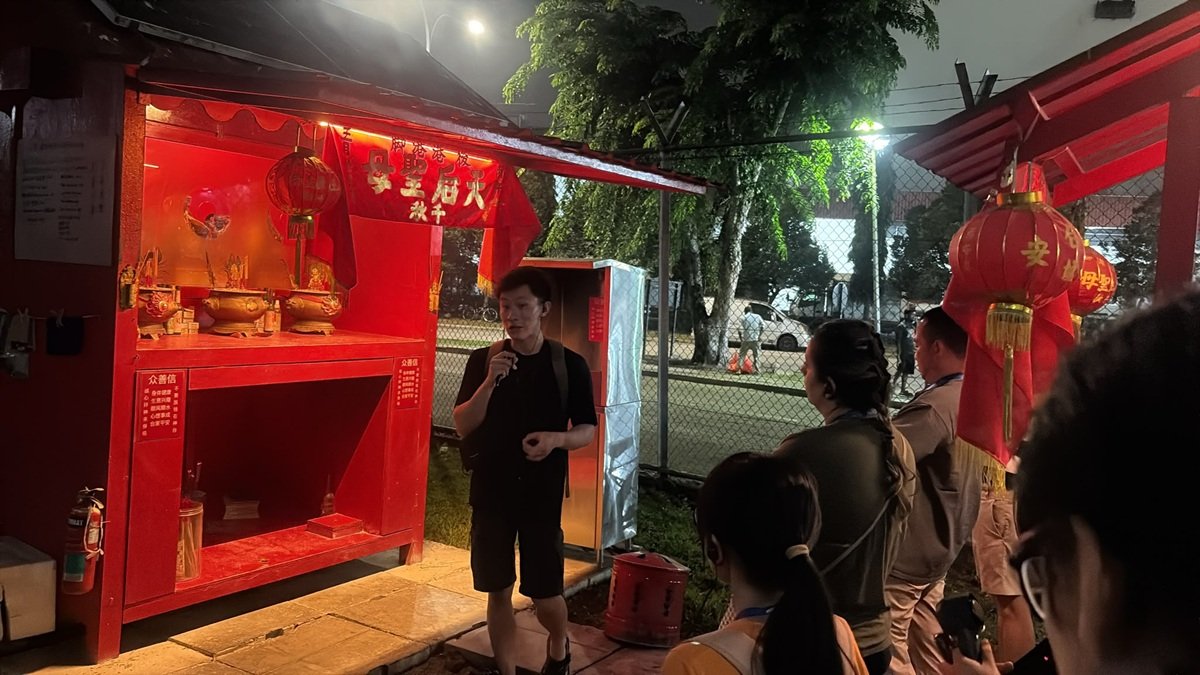
The Mazu altar was brought over from Senoko Fishery Port when it closed in 2024, but the tradition of worshipping the sea goddess goes back much further, to the old Kangkar fishing village in Punggol.
According to Chinese folklore, Mazu is assisted by two legendary guardians, Qianliyan (千里眼), who can see over great distances, and Shunfeng’er (顺风耳), who can hear sounds from far away. They are believed to help Mazu watch over fishermen and sailors, protecting them from dangers at sea.
It was interesting to find this little shrine tucked away within the fishery port, a reminder of the beliefs and traditions that have accompanied Singapore’s fishing communities for generations.
A Giant Ice-Shaving Machine
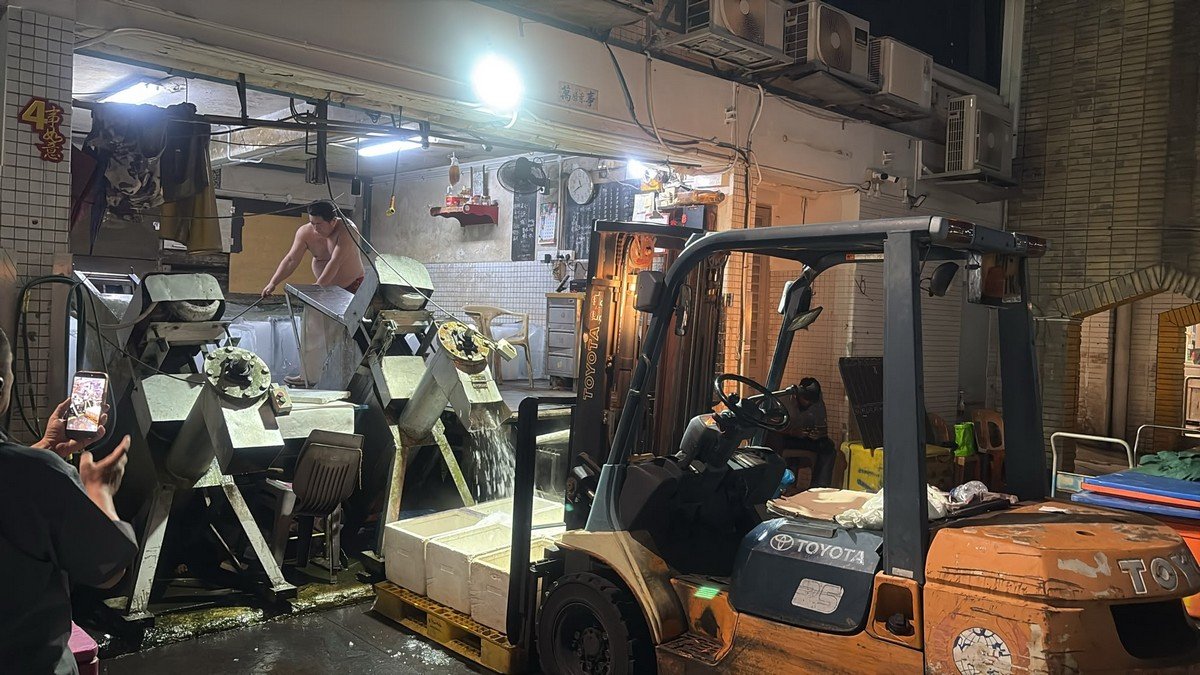
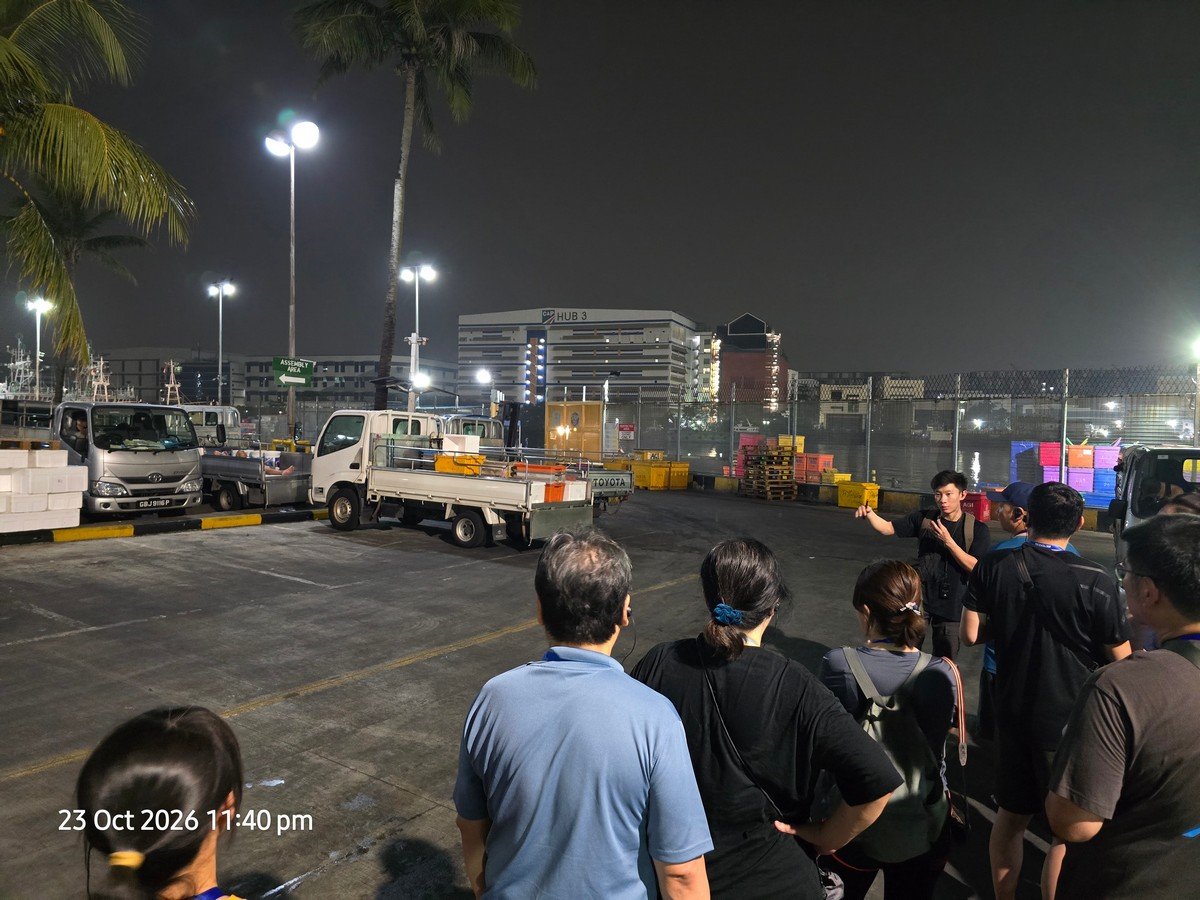
We then proceeded to the main wholesale market complex, where most of the fish trading activities take place. Our first stop was at the side of the building, where the guide showed us a huge industrial ice-shaving machine. The ice blocks were supplied by the nearby Singapore Ice Factory and fed into the machine, which shaved them into smaller flakes for use by the fish merchants.
Although I have seen ice-shaving machines before, this was my first time seeing one on such an enormous scale. Ice plays an important role in the seafood trade, keeping the fish chilled and fresh from the time they are unloaded until they reach the retailers and consumers.
From there, our guide brought us near the Customs and Immigration checkpoint (see yellow gate in below photo), where fishing vessels arriving from neighbouring countries undergo clearance before their catches can be unloaded. It was fascinating to think that fish caught in waters around the region could arrive here in the middle of the night and find their way to wet markets and restaurants across Singapore just a few hours later.
A Bird’s-Eye View of the Wholesale Market
Next, we climbed to the second level of the market complex, where an elevated walkway runs through the middle of the building, overlooking the wholesale trading area below.
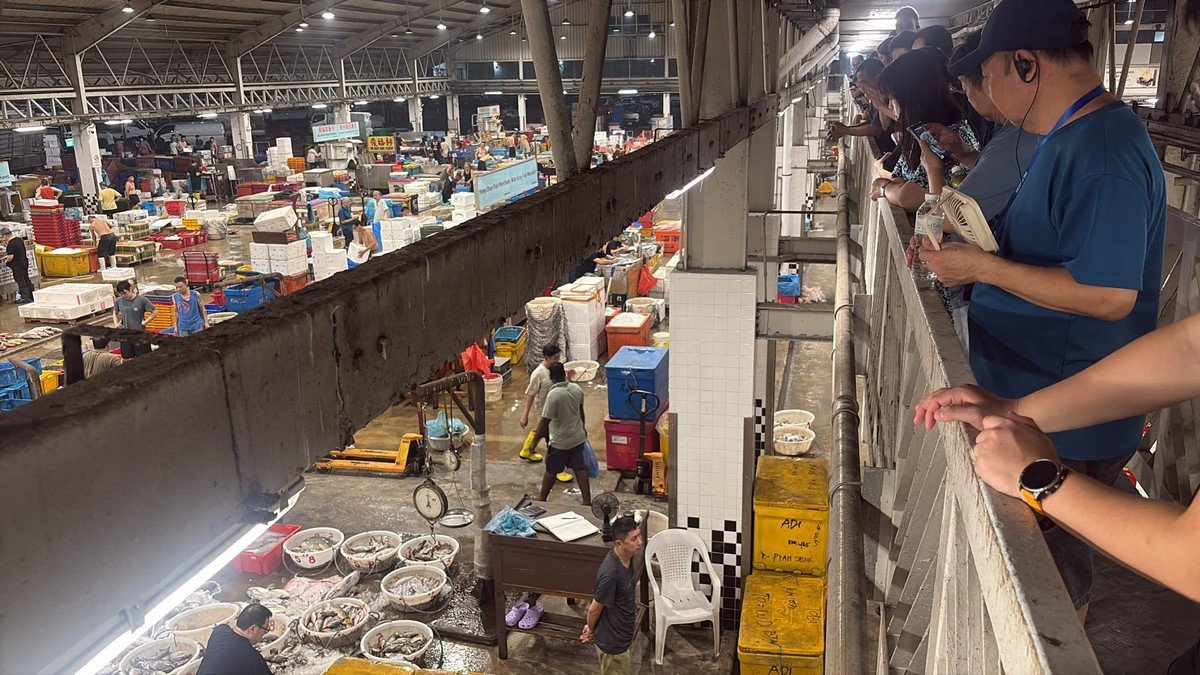
According to our guide, the walkway is used by Singapore Food Agency (SFA) officers to observe activities taking place in the market. From this vantage point, they can monitor the movement of fish, merchants and workers without having to walk through the busy trading floor.
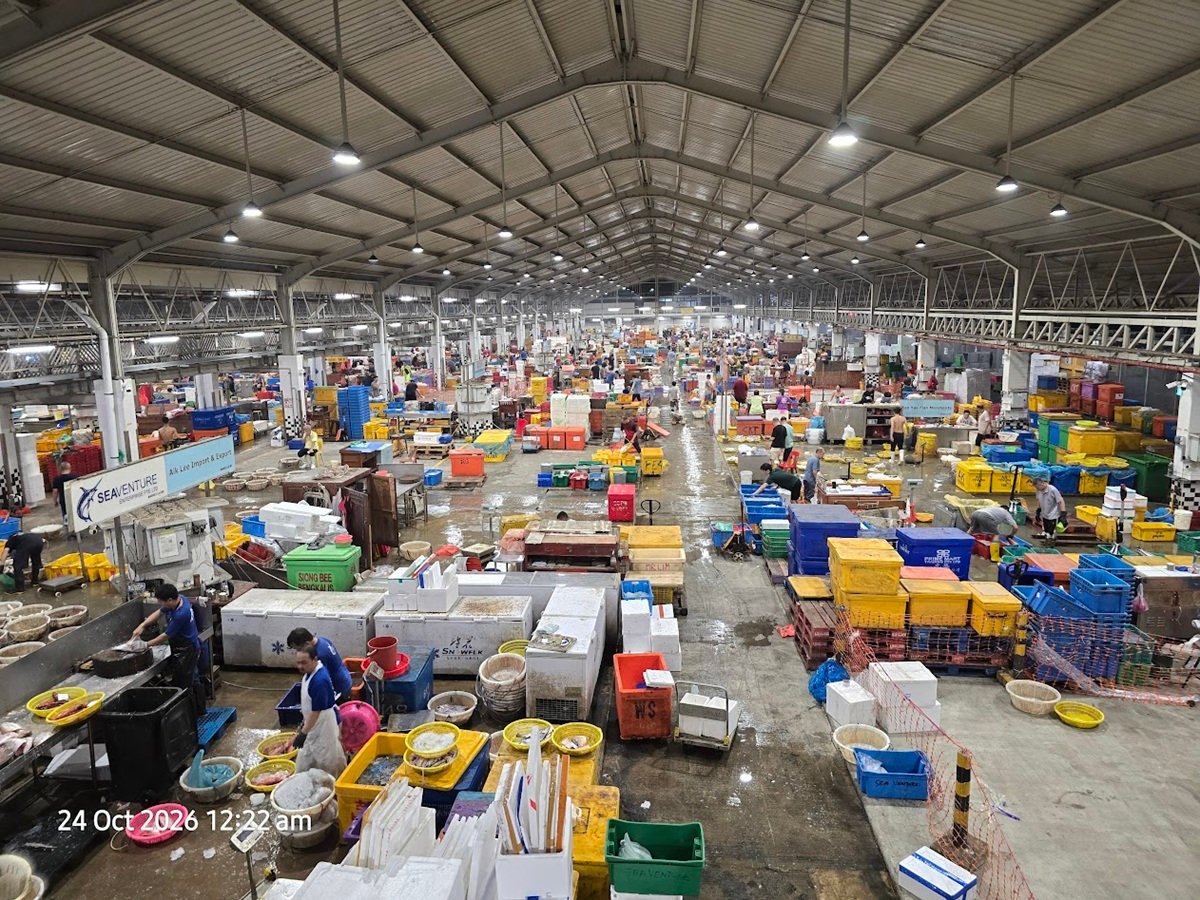
Our entire group walked along the elevated passageway, with the guide stopping at various points to explain the sights and activities below. He also pointed out the different types of fish, telling us their names, explaining their characteristics, and even sharing tips on the best ways to cook and enjoy them. The view from above offered a completely different perspective of the wholesale market. We could see the layout of the trading area and gain a better understanding of how the various activities were organized and carried out.