I recently went through the oral history interview of Tham Sien Yen, a former member of Force 136 who operated behind Japanese lines in Malaya during the Second World War. I have read quite a bit about Force 136, particularly Lim Bo Seng and the British officers involved in the organisation. However, Tham’s account gave me a better understanding of what life was actually like for the men on the ground.
His story is quite remarkable. Born in Ipoh, he left school to participate in anti-Japanese activities, travelled to China for military training, served briefly in Burma and eventually returned to Malaya as a secret agent. What I found especially interesting was his relationship with some of the major figures in the Malayan resistance, including Lim Bo Seng, John Davis and Chin Peng. He also spoke quite openly about the mistakes made by Force 136, the difficulties of working with communist guerrillas and the problems faced by the organization during the occupation.
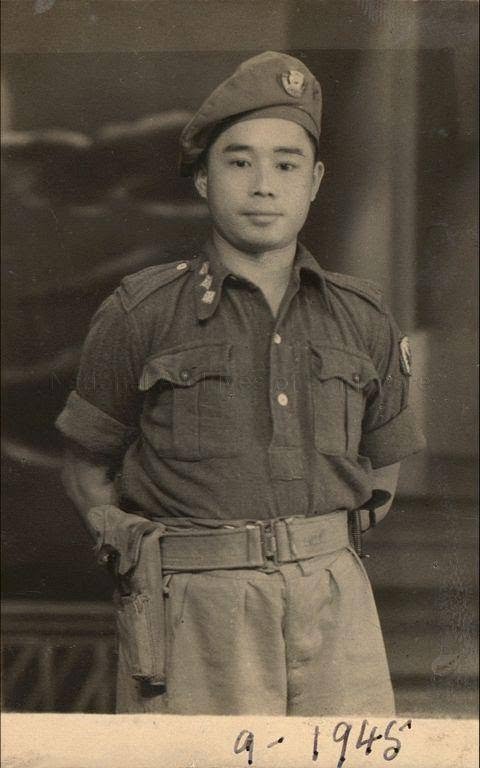
1. Early Life in Ipoh and the Journey to China
Tham was born in Ipoh in 1918. His parents came from Guangdong, China. While attending high school, he became increasingly interested in the anti-Japanese movement following Japan’s invasion of China. He joined the Anti-Enemy Support Association, a secret organisation that distributed anti-Japanese materials in Ipoh. Although the association had links to left-wing political organisations, Tham maintained that he was not particularly concerned about its political background. His main interest was resisting Japan.
Later, he met a friend who had arrived from China to organise anti-Japanese propaganda activities. The two travelled through northern Malaya, holding exhibitions of photographs showing Japanese atrocities in China. They visited towns including Penang and Taiping, relying on local Chinese associations to arrange venues and collect donations. Tham eventually abandoned his studies altogether. In 1940, at about 22 years of age, he left Malaya with a group of volunteers to join the Chinese war effort. Their journey took them through Singapore, Saigon and Kunming before reaching Chongqing, the wartime capital of Nationalist China.
At Chongqing, he joined a military training establishment associated with the Central Military Academy. Training was tough, particularly during winter. Tham remembered the harsh living conditions, including inadequate food, basic sleeping arrangements and clothing that offered little protection against the cold. Apart from military exercises, the trainees underwent political education and learned how to motivate and instruct ordinary soldiers. After completing much of his military training, Tham was selected for intelligence work. His first assignment took him to Burma, where he joined a small Chinese Nationalist intelligence unit responsible for gathering information on Japanese troop movements. However, the Japanese advance into Burma forced the Chinese forces to retreat, bringing his assignment to an early end. He returned to China and worked briefly with an organisation helping overseas Chinese refugees in Kunming. Not long afterwards, another opportunity came along.
2. Recruitment and Training with Force 136
By 1942, the British and Chinese Nationalist governments were discussing cooperation in conducting secret operations against the Japanese in Malaya. Lim Bo Seng was closely involved in these arrangements. Under the proposed cooperation, the British would provide training, transport, funding and equipment, while the Chinese Nationalist authorities would help recruit suitable personnel. Tham was selected because he had grown up in Malaya and already possessed military and intelligence experience.
In early 1943, he travelled to India with one of the first groups of recruits, accompanied by Lim Bo Seng. Upon arriving in Calcutta, they were met by two British officers, John Davis and Richard Broome. Both spoke Cantonese, which Tham particularly appreciated because his English was limited. The training in India was quite different from what he had experienced in China. Instead of concentrating on military drills and political instruction, the men were taught practical techniques for operating behind enemy lines. These included jungle navigation, intelligence gathering, sabotage, explosives and the handling of rubber dinghies. The men also underwent extensive training in using rubber dinghies, as they might have to reach Malaya from a submarine. As things turned out, that was exactly what happened.
3. Returning to Japanese-Occupied Malaya by Submarine
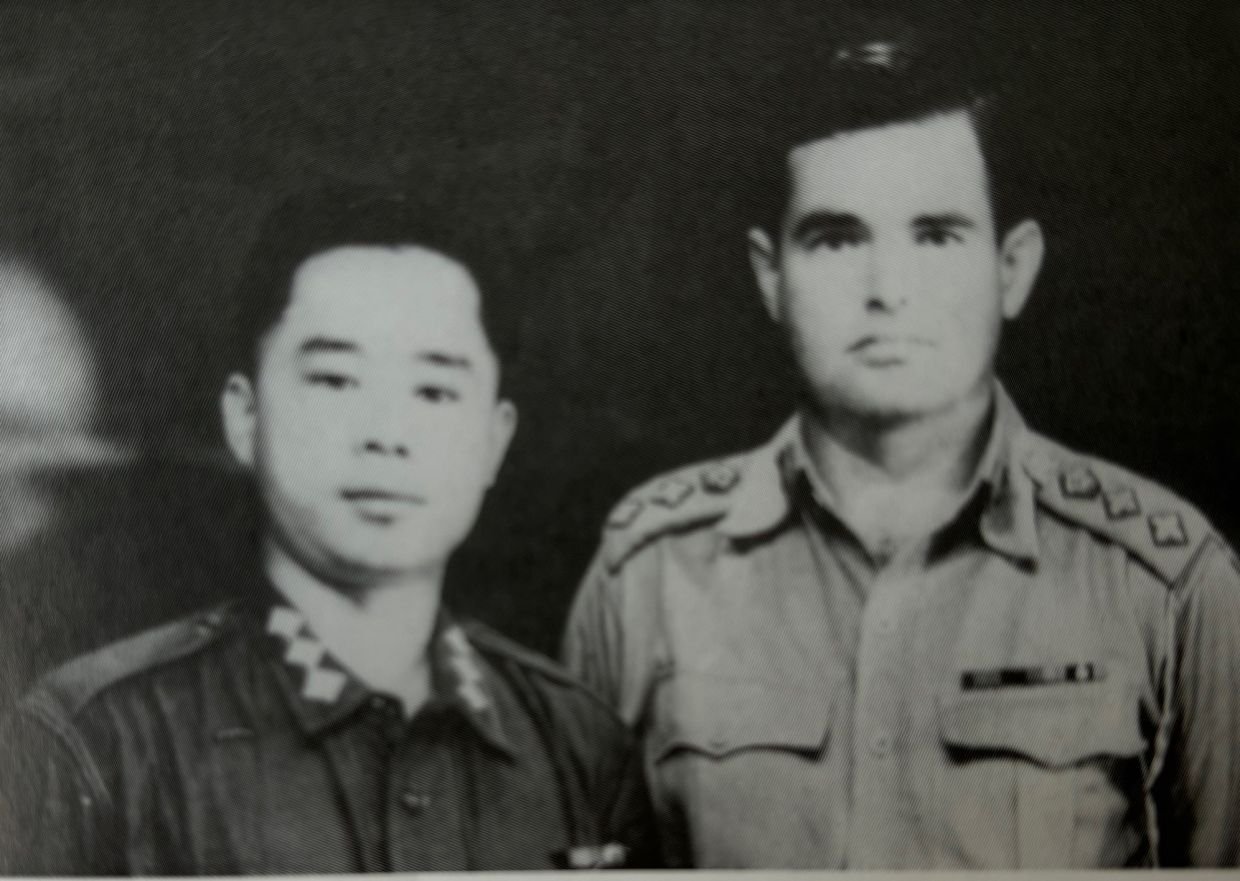
Tham was among the first Force 136 personnel sent back into Japanese-occupied Malaya. Their submarine departed from Colombo and headed towards the Malayan coast. Life on board was uncomfortable. The submarine was cramped, poorly ventilated and hot, especially when submerged. During the voyage, Tham remembered an encounter with a Japanese warship. The submarine fired torpedoes, but they missed their target. The men eventually landed near Segari on the Perak coast, paddling ashore in inflatable boats.
Having reached Malaya, their immediate problem was finding somewhere safe to hide. They had to depend on local people for food, shelter and directions while avoiding Japanese patrols. Tham later travelled to Ipoh, where his familiarity with the town and its people proved useful. His assignment included establishing contacts, finding suitable recruits and gathering intelligence about Japanese activities. However, Force 136 soon discovered that establishing an intelligence network under Japanese occupation was much more difficult than expected.
4. Cooperation with Chin Peng and the MPAJA
One of the main objectives of Force 136 was to establish cooperation with the Malayan People’s Anti-Japanese Army (MPAJA). Naturally, there was some suspicion between the two organisations. Force 136 was backed by the British and Chinese Nationalist governments, while the MPAJA was communist-led. Nevertheless, both sides needed each other. The MPAJA had established guerrilla networks and knew the local terrain. Force 136, on the other hand, could potentially provide arms, explosives, specialist training and contact with the Allied command in India.
Tham eventually developed a close working relationship with the guerrillas. According to his account, Chin Peng was personally involved in receiving Force 136 personnel and later accompanied Lim Bo Seng to the jungle headquarters. Tham spent considerable time maintaining relations with the MPAJA. Their camps were located close to one another, allowing him to visit the guerrillas frequently. He even borrowed books from them, including Chinese translations of Russian novels, to pass the time. Despite their political differences, Tham generally got along well with the communist guerrillas. He was more concerned with defeating the Japanese than becoming involved in their political arguments.
5. Lim Bo Seng’s Arrival and the Problems Facing Force 136
According to Tham’s recollection, Lim Bo Seng arrived at the jungle headquarters on 1 December. His arrival was welcomed by the Force 136 personnel. Tham held Lim in very high regard, particularly because of his conduct during their earlier training in India. Although Lim held a senior position and could have enjoyed better accommodation and treatment, he chose to share the same living conditions as the ordinary trainees.
Lim’s arrival also allowed the organisation to address several outstanding problems, particularly the need to improve its intelligence network in the towns, communications and transportation. Unfortunately, there were already serious weaknesses in the network. Some intelligence operatives knew too much about one another’s locations and movements. While this was understandable during the early stages of establishing contacts and accommodation, it also meant that the arrest of one person could potentially expose several others. Lim recognised the danger and wanted to reorganise the network.
At the same time, Force 136 was running short of money. Several attempted submarine rendezvous had failed, preventing the organisation from receiving much-needed funds and equipment. These problems eventually persuaded Lim to leave the jungle headquarters and return to the towns. Before departing, he appointed Tham to represent him at the jungle base. It turned out to be a disastrous period for Force 136.
6. The Arrest and Death of Lim Bo Seng
In early 1944, Japanese counter-intelligence began arresting members of the Force 136 network. One arrest was followed by another. Lim Bo Seng attempted to warn the remaining operatives, but communications were difficult, and events were moving too quickly. He was eventually captured. Tham recalled that news of the arrests gradually reached the jungle headquarters, but the men were unable to obtain a complete picture of what had happened.
To make matters worse, they had lost reliable wireless communications with India. This meant Allied headquarters did not know the full extent of the disaster. The intelligence network in the towns was effectively crippled, while the remaining personnel in the jungle were left with limited resources and few means of obtaining instructions. Lim Bo Seng subsequently died in Japanese captivity. Tham and the others did not learn of his death until after the war.
One point that stood out to me was Tham’s explanation of the network’s weaknesses. The organisation had relied heavily on personal contacts, partly because everyone was trying to establish operations under extremely difficult conditions. Unfortunately, those same personal connections became a serious liability when the Japanese started making arrests. It is easy to understand the problem in hindsight, but the men involved had very few alternatives at the time.
7. Life in the Jungle and Rebuilding Force 136
With the loss of much of their intelligence network, Force 136 entered a particularly frustrating period. The men remained in the jungle, waiting for opportunities to restore communications and resume operations. Tham described how they spent their time reading, exercising, playing games and visiting the nearby MPAJA camp. Food was another concern, and they had to supplement whatever supplies they could obtain. There were repeated efforts to establish contact with submarines and recover wireless equipment. Sometimes the equipment was too heavy to transport. On other occasions, it was damaged or could not be made to work properly.
Eventually, Force 136 succeeded in re-establishing wireless contact with India. This was a major improvement, allowing the organisation to receive instructions, arrange supply drops and expand its activities. Aircraft began dropping weapons, ammunition, equipment and other supplies to designated locations. According to Tham, the organisation eventually established around 22 operational units throughout Malaya.
Tham also became involved in arrangements to provide more systematic military training to the MPAJA. Although he admired the guerrillas’ determination, he felt that their tactical knowledge could be improved. Training included weapons handling, marksmanship, camouflage and ambush techniques, with the aim of making the guerrillas more effective in their operations against the Japanese.
8. Japan’s Surrender and the Return of the British
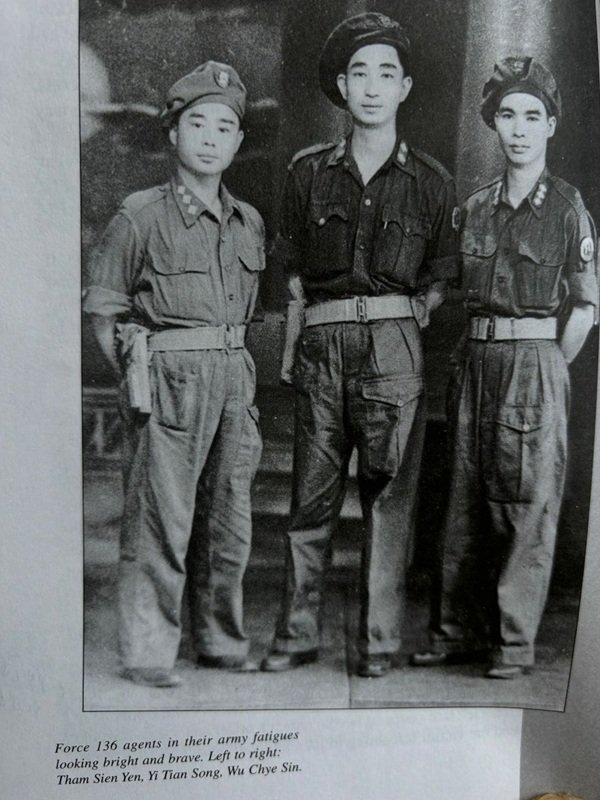
By August 1945, Force 136 was preparing for the next stage of the war when news arrived that Japan had surrendered. For the men who had spent years preparing for more extensive operations, the war ended rather abruptly. Their attention now shifted to restoring order and making arrangements for the return of the Allied authorities.
Tham subsequently carried out assignments in several parts of Malaya, including Ipoh, Kelantan and Terengganu. His responsibilities included contacting community leaders, observing local resistance groups and assisting with postwar arrangements. The situation was not entirely peaceful, and he helped establish contact with prominent members of the Chinese community to encourage them to assist in maintaining public order.
9. From the Malayan Jungle to the Victory Parade in London
After the war, Tham received recognition for his service with Force 136. He also participated in the formal surrender ceremonies in Singapore. The following year, he travelled to Britain for the Victory Parade in London in June 1946.
I find this part of his story particularly striking. Just a few years earlier, he had been a young man from Ipoh undergoing military training in wartime China. He had subsequently spent the Japanese occupation living secretly in Malaya, moving between jungle camps and trying to avoid capture. Now he was in London participating in an international celebration marking the Allied victory. It was quite an extraordinary journey.
10. Life after War World Two
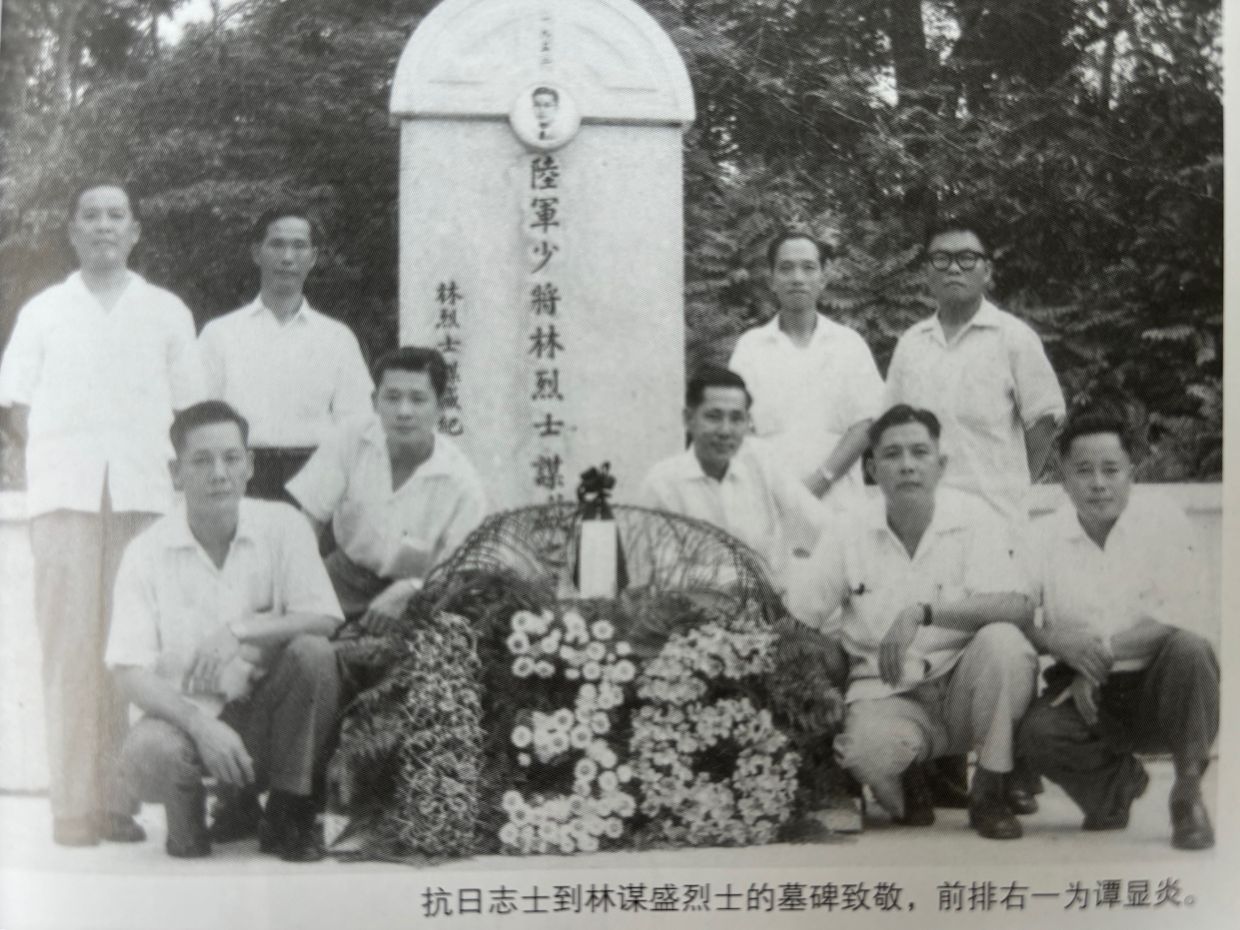
After Japan’s surrender in 1945, Tham continued serving with Force 136, helping to maintain public order and resolve disputes between the British authorities and local anti-Japanese groups. In recognition of his wartime service, he was awarded the rank of captain and took part in the victory celebrations in Singapore and London.
After the war, he settled in Ipoh, where he married and ventured into the mining business. During the Malayan Emergency, he helped organise a security force to protect Chinese-owned tin mines, which eventually grew to around 2,000 men.
In 1958, he moved to Singapore to help his elder brother in the construction business. His daughter, Tham Yew Chin (谭幼今), better known as You Jin (尤今), went on to become a well-known Chinese-language writer and received Singapore’s Cultural Medallion in 2009.
Looking back, Tham felt that his wartime involvement had cost him opportunities to build a better financial future. Nevertheless, he had no regrets, believing that serving his country and people was more important than personal wealth.
Source Acknowledgement
Based on the oral history interviews of Tham Sien Yen (Accession No. 000254, Reels 1–17), Oral History Centre, National Archives of Singapore.
Leave a Reply