Day 1 (Singapore – Kolkata)
Our trip began with a SilkAir night flight from Singapore to Kolkata. We felt our minority presence even before actually reaching India, as almost all the passengers on board were Indians. The in-flight dinner served was also typical Indian cuisine – a choice of fish curry or vegetables with basmati rice. Our plane landed at the Netaji Subhas Chandra Bose International Airport (a.k.a. Dum Dum Airport) around midnight.
The airport was quite run-down despite being named after an important historical figure in contemporary India. We approached the pre-paid taxi booth beside the immigration counter to book a taxi. The taxi receipt stated INR 240. We paid using an INR 500 note but were short-changed by INR 100. The cashier nonchalantly returned us the shortfall when we confronted him with the receipt. Similar scenes of overcharging and nonchalantly returning the shortfall when questioned were repeated several times during our trip. The Bengalis, unlike the Chinese, would not make any “apologetic excuse” for overcharging or harass us for a higher fee once exposed – perhaps one could consider it a non-hypocritical approach to corruption?
We boarded one of the ubiquitous yellow-coloured Hindustan Ambassador taxis. The taxi was antiquated, but it had a very big boot which easily accommodated all of our luggage. The taxi ride to our hotel – Shivangan Hotel – took about 20 mins. We were greeted by the hotel security guard at the main gate and had to take an old elevator with scissor gates to reach the check-in counter on the second floor. Unfortunately, we had to take turns going up in the small elevator, as it could only accommodate three persons (with no luggage) at one time. Fortunately, the hotel room was clean, a hot shower was provided, and the staff were very polite as well.
Day 2 (Kolkata – Bagdogra – Yuksom)
The next day, we woke up around 8am in order to catch our flight. Our first meal in India – breakfast provided by the hotel – was ironically American-style, consisting of sunny-side-up eggs/omelette and toast. After checking out, we took a taxi back to Dum Dum Airport for our flight to Bagdogra. It was entertaining to sit in front beside the driver, watching him manoeuvre the antique beast skilfully through the congested thoroughfare shared by other cars, trishaws, bullock carts and even cows. Halfway through, I realised that the taxi had no side mirrors – the driver must have removed them so that he could manoeuvre through the traffic better.


We boarded a Jet Airways flight to Bagdogra. The duration of the flight was only an hour, but we were pleasantly surprised to be served an in-flight lunch. At Bagdogra Airport, we were picked up by a man with a placard bearing my name. He wasted no time in introducing himself to us. Once he confirmed our identity, he grabbed our luggage trolley and directed us towards a Mahindra MPV in the car park. He handed us over to the MPV driver and extorted tips from us. We paid him INR 50 and he happily scurried back to the airport, perhaps to make a few more pick-ups. The driver must have outsourced his pick-up responsibility to the porter, living up to the nation’s ultimate reputation for outsourcing!
The driver drove us to a petrol kiosk and requested INR 1,500 from us to pay for the petrol top-up. We were both hesitant and reluctant because all the land transportation fees were supposedly covered by the tour package. We gave him the money as he promised to pay us back once we reached Yuksom. We later found out that the driver was also outsourced and was not a staff member of the tour agency.
The driver drove us to the Sikkim Tourism Office in Siliguri (a 30-min journey from Bagdogra) to apply for the Restricted Area Permit (RAP). The office was manned by two friendly East Asian-looking staff members (the majority of Sikkim’s population are of Nepali ethnic origin). The permit application process was FOC, red-tape-free and completed within 30 mins. We then continued on with a seven-hour winding and rocky journey to Yuksom. The road condition was quite bad, with numerous potholes and falling rocks from the hillslopes/cliffs above the road. As a result, we only managed to travel at an average speed of 30 km/hr along the 160 km stretch of mountain road (National Highway 31A), which runs along the banks of the Teesta River from Siliguri to Yuksom. At certain points, the MPV even had to cross shallow streams which cut across the road perpendicularly as they flowed down from the mountains above. Some sections of the road were so narrow that only one vehicle could drive through at a time. For such sections, we had to wait up to 15 mins for the opposite traffic to clear before it was our turn to drive through.
Halfway through the journey, we reached the Melli Police Checkpoint, at the border between West Bengal and Sikkim, where we were required to submit our RAP for further endorsement. The actual endorsement process was quite fast, but it took us more than 20 mins because of the queue of other foreigners in front of us.
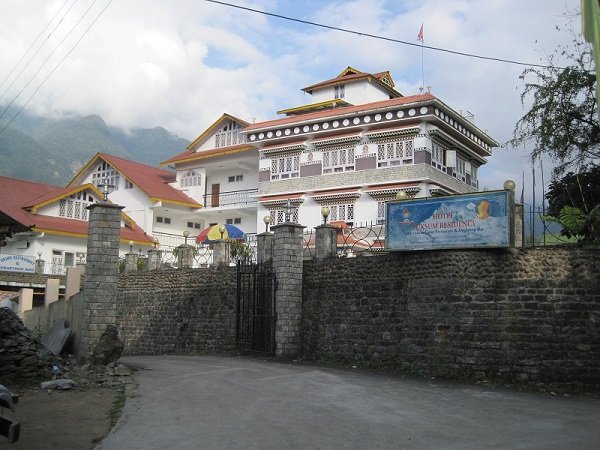
It was already sunset by the time we entered Sikkim. We spent the next three to four hours cruising around the mountains in pitch darkness. We also had to endure Bengali pop songs blasting from the car audio on repeat mode. Towards the end of the journey, the driver lost his way and spent an additional hour finding the right route to Yuksom. We finally reached our hotel – Yuksom Residency – at about 9.30pm. The hotel staff came forward to welcome us in their cultural way by putting a scarf (khata) around our necks. We felt like VIPs. The hotel was majestic-looking, with hot showers and friendly staff. The only downside was that there was no heater available, and it did not help that it was about 15 degrees Celsius that night. Dinner was garlic rice and fried baby corn served in our rooms. We started our Acetazolamide medication for combating high-altitude sickness on this day.
Day 3 (Yuksom – Tshoka)
Our mountain guide, Nima, knocked on our room doors at 7.30am. After introducing himself, he placed a welcome scarf (khata) around our necks. He told us that everything, including the pack animals, was ready and that we could start our hike immediately after breakfast. We were impressed by his efficiency. After our breakfast of omelette, toast and oatmeal provided by the hotel, we boarded a jeep to the Sikkim Park Office for the mandatory paperwork, which was settled by our guide. The trailhead was just beside the Park Office, but we only started the trek proper at approximately 9.30am.

Our entourage consisted of one mountain guide (Nima Sherpa), two porters (Tashi Sherpa and Dharma Singh), one master cook, two cooking assistants, one yak man, one horseman, four dzos (a hybrid of yak and cow) and four horses. Our large entourage made us feel like we were glamping rather than doing a typical rough-it-out hike with the bare essentials. The guide and his helpers were all ethnic Nepalis and they conversed with each other in Nepali.
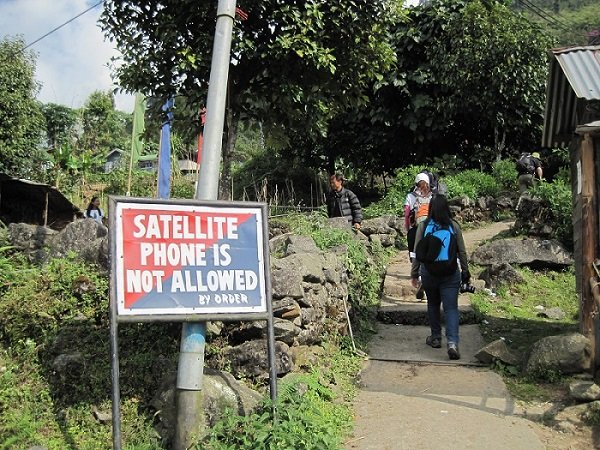
We covered a hefty 16 km on the first day of our trek, ascending from Yuksom (~1,700m) to Tshoka (~2,900m) in approximately seven hours, including rest time and the lunch break. The route was the toughest and longest compared with the other days, as it involved plenty of uphill climbs and walking on uneven rocky paths, which took up a lot of our energy. As the trail was still at a relatively low altitude, we started to sweat profusely after a few minutes of walking and had to start removing our pre-worn layers. (Advice: For trekking on the first day, wearing a pair of shorts, T-shirt and windbreaker will be sufficient. Cold wear is not needed at all.)
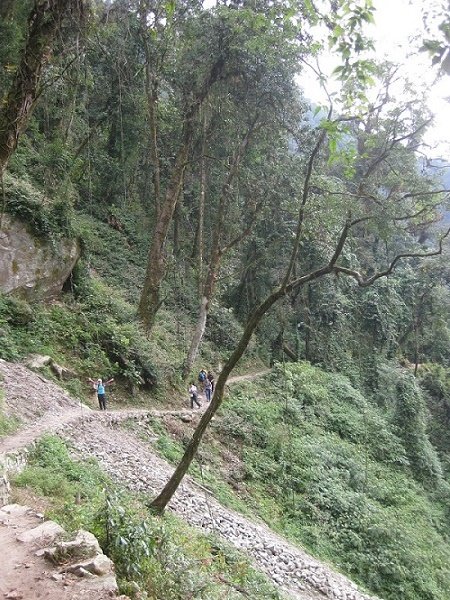

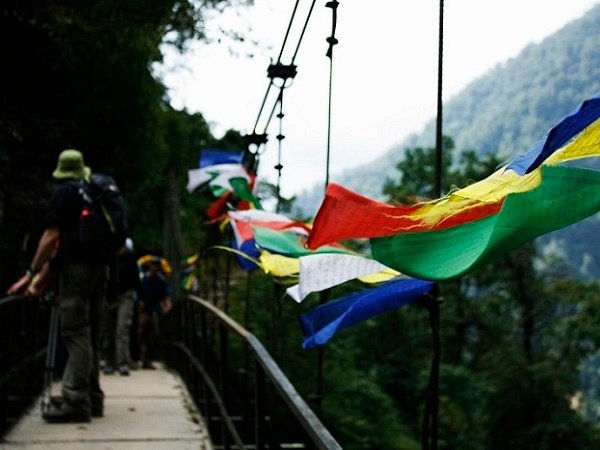
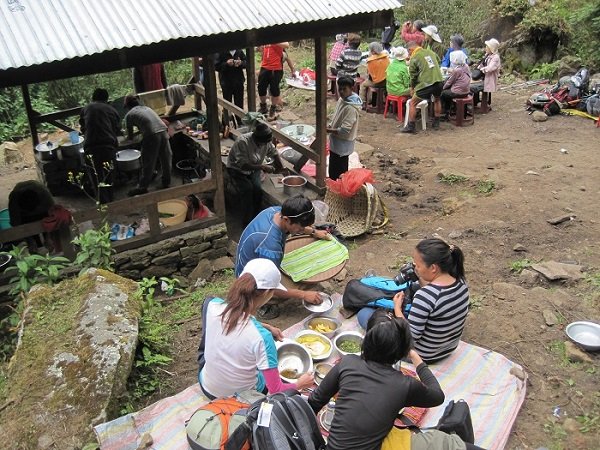
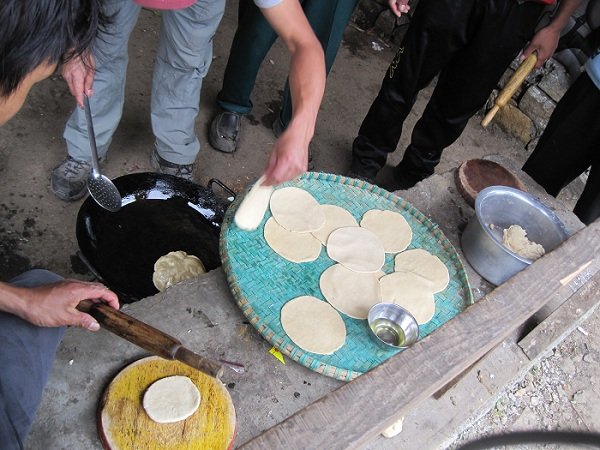
The first part of the trail ran parallel to the Rathong River and wound through dense semi-tropical forests. For the first three hours, the trail was highly undulating, with a gentle rise in altitude. Shortly beyond the confluence of the Rathong and Prek Chu rivers, the trail then descended steeply onto a suspension bridge. We crossed the Prek Chu River via the suspension bridge and stopped for lunch nearby. While resting, we watched our cook knead the dough fastidiously to make naan. Lunch consisted of noodle soup, masala vegetables, cauliflower with mayonnaise, fried potatoes and naan. After the bridge crossing, we had to endure a steep ascent for nearly two hours straight to reach Bakhim (~2,700m). There was a tea/snack stall in Bakhim, a couple of trekkers’ huts and a view that provided plenty of photo-taking opportunities. From Bakhim, it was another hour’s worth of steep climbing before reaching our destination for the day – Tshoka.
Tshoka was located on a plateau with some huts and wooden cabins for trekkers. There was a flat campground to the left of the trekkers’ cabins and a cafe located slightly uphill, serving locally brewed millet beer and momos. At the edge of the plateau was a small Tibetan monastery with a pond.
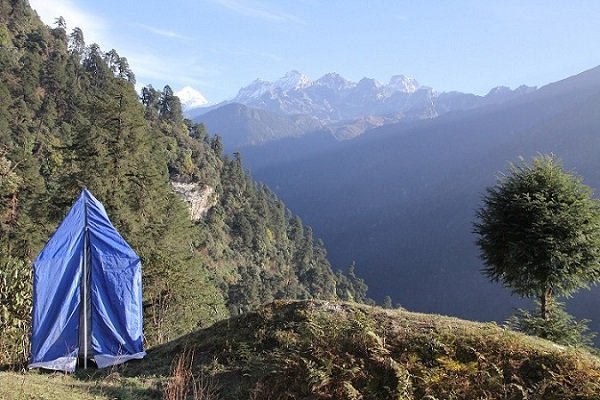
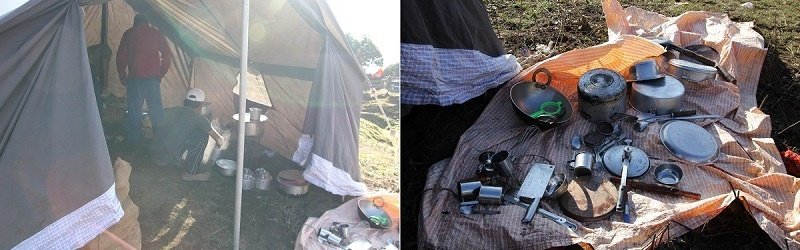
We reached Tshoka at around 4.30pm and waited for 45 mins before the pack animals arrived with our baggage, food and tents. On the other days, the animals actually arrived at the destinations before us. Our porters set up our tents – sleeping, kitchen, dining and toilet – on the campground, and we did what we could to freshen up, using plenty of wet wipes and powder, while waiting for dinner to be served. Dinner was served at 7pm in a dining tent with a plastic table and foldable chairs. Dinner was plentiful, with salad, soup, fried long beans, stewed vegetables, curry chicken, dal and rice, followed by dessert. The temperature that night was about 8 degrees Celsius.


Day 4 (Tshoka – Dzongri)
We woke up at about 6.30am to stunning views of the snow-clad Mount Pandim (6,691m) and Tenzingkhan, named after Tenzing Norgay. As part of the wake-up call, a choice of tea, coffee or hot chocolate, followed by a basin of warm washing water, was served to our tent every morning. We had a nutritious breakfast of omelette, toast, oatmeal and cereal with milk. While we were having breakfast, the rest of our trekking entourage were busy dismantling the tents, rolling up the sleeping bags and getting ready for the day’s trek. We started the trek at about 9am.
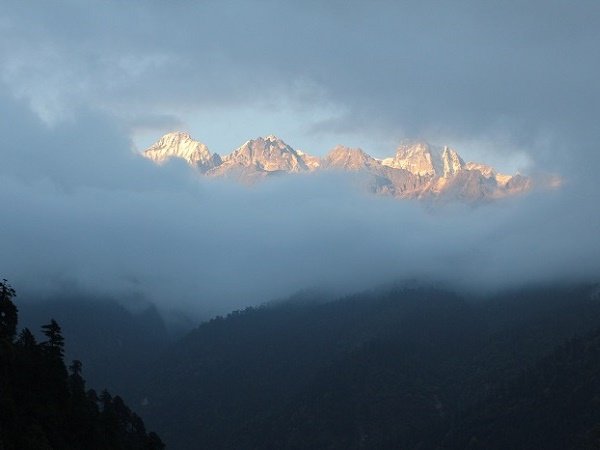
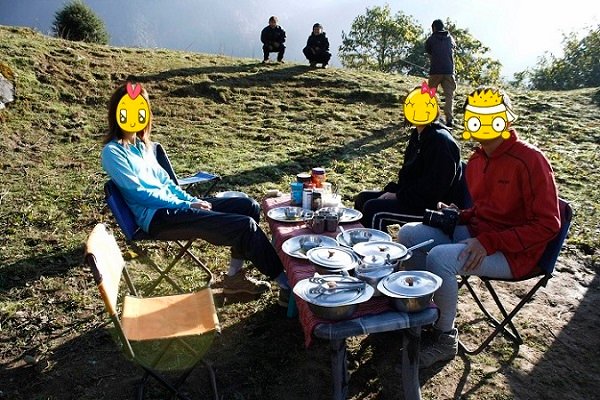
The trek from Tshoka to Dzongri (~3,900m) spanned a distance of 9 km and took us about five hours to complete. The trek started off with a steep climb for the initial 30 mins and then evened out to a relatively gentle slope on wooden planks for the next two hours. The wooden path eventually led us out to a large clearing called Phedang (~3,600m), where the peaks of Pandim, Narsingh and Joponu were clearly visible. We rested for lunch and were served salad, noodle soup, penne pasta, stir-fried sausages, baked potatoes and rice. After lunch, we ascended uphill for another hour to reach a small clearing with a multitude of prayer flags. It was a place called Deorali (~3,980m), the highest point of the day’s trek. After a short rest in Deorali, we continued on for another 30 mins to reach Dzongri at about 2pm.
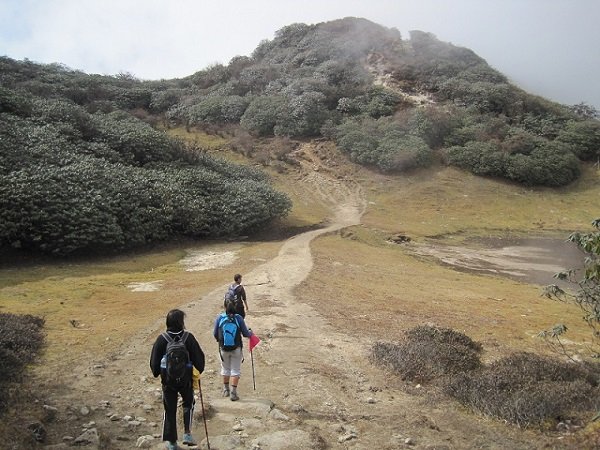
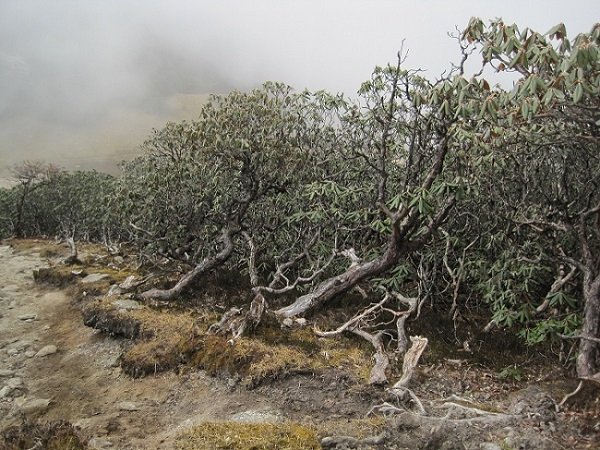
We saw many Rhododendron shrubs along the trail. As it was autumn, we did not manage to see any of their magnificent flowers, which bloom only during spring. Otherwise, this stretch of the trail would definitely have been the highlight. We were, however, surrounded by a fragrant smell originating from the trees.
Dzongri was a meadow surrounded by hills and mountains on all sides. There was a trekkers’ hut, two mini shops selling drinks, snacks, beanies, batteries, etc., and a huge campground. Our porters set up our tents and we waited passively inside our warmer tents for the day to pass. There was not much to do at the campground except read books, play cards, do our body-maintenance routine, shit or sleep. Dzongri was where we started to feel the cold. The night temperature was below 5 degrees Celsius. We had an early night after dinner as we had to wake up early the next morning to climb to the top of Dzongri to watch the sunrise.
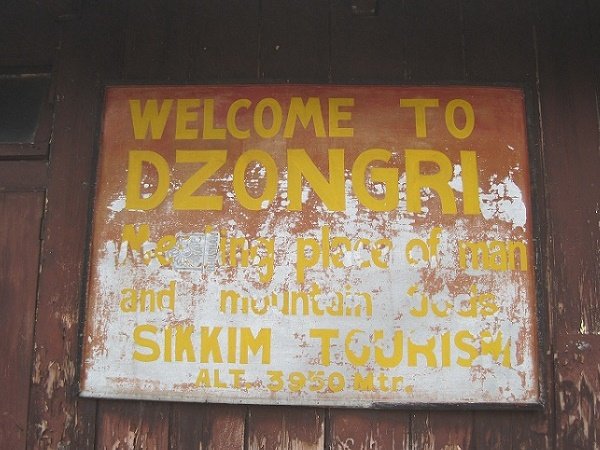
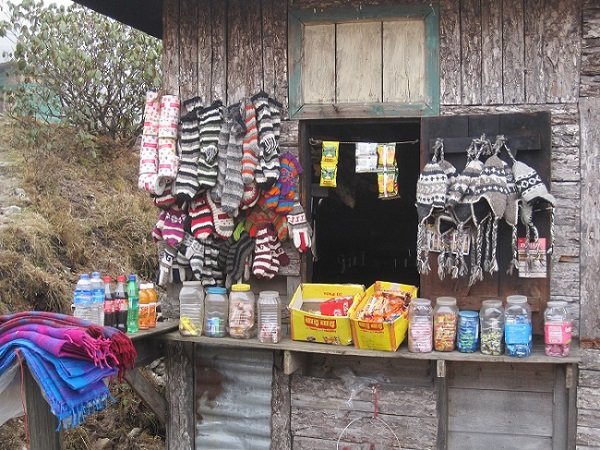
Day 5 (Acclimatisation Day in Dzongri)
Today was considered a resting and acclimatisation day for us. The only physical activity we had was to climb to the top of Dzongri (~4,150m) to watch the sunrise. Our guide woke us up at 4am with hot black tea. We started the climb at 4.30am in pitch darkness with our headlamps and reached the top of Dzongri at 5.30am, just in time for sunrise. At the top of Dzongri, we saw the sun rise in the east, casting its rays on the mighty peaks of the Singalila and Kanchenjunga ranges to the west.
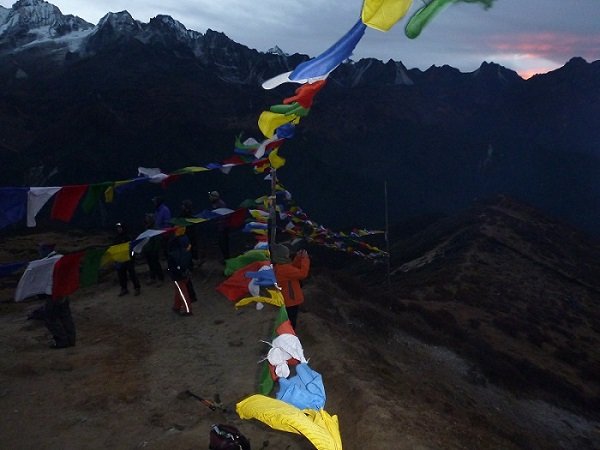
At Dzongri Top, we saw a group of elderly Japanese trekkers in their sixties and early seventies who had reached there before us. Despite their age, they were very energetic, constantly moving around with their bulky DSLRs to find the best spots for group photos and portraits against the mighty Himalayas. They were also very well equipped with sturdy shoes, gaiters, Gore-Tex jackets, etc. With our lethargic looks and mediocre clothing/equipment, it was difficult not to develop a kind of trekkers’ inferiority complex within us. We returned to the campground at about 6.45am. The rest of the day was spent lazing around, doing our usual body-maintenance routine, waiting for meals to be served and waiting for bedtime.
Breakfast – Pancakes, sausage, egg, cereal with milk
Lunch – Sandwiches, noodle soup, sweet corn, fried long beans, luncheon meat
Dinner – Pumpkin soup, fried rice, momos, cauliflower, stewed vegetables, pizza, banana pie (dessert)

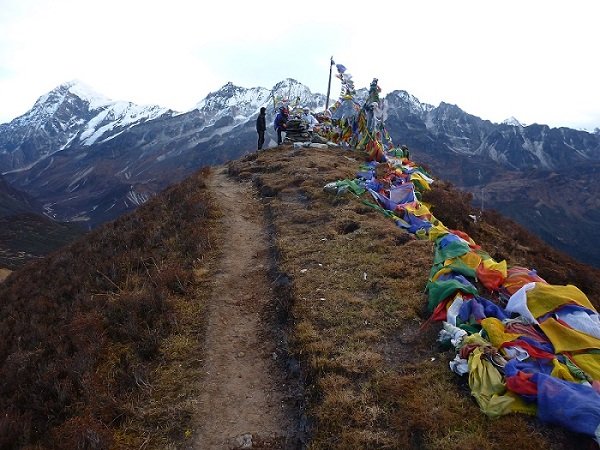
Day 6 (Dzongri – Thangshing)
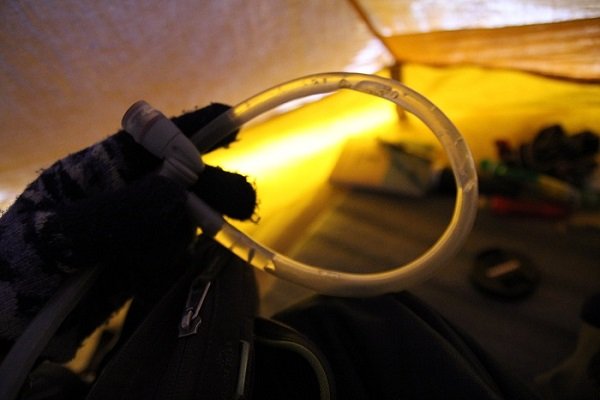
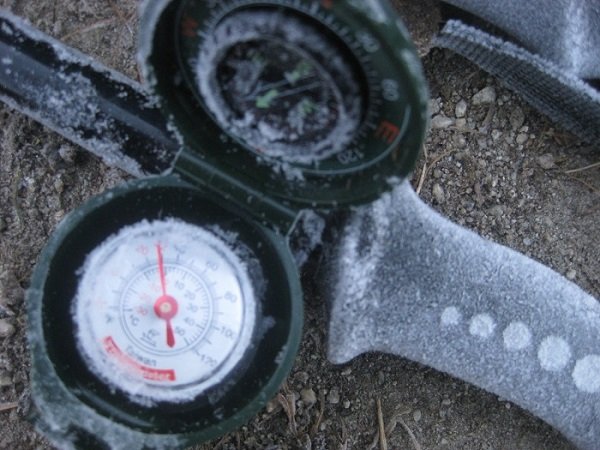
The temperature outside was -1 degree Celsius when we woke up the next morning. Small specks of ice had formed on our tent and the surrounding grassland. It did not snow the night before. Water vapour must have condensed and then frozen on these surfaces. The water in the drinking tube of my water bag, which I had placed inside the tent, was also frozen. Breakfast was a hearty affair of oatmeal, toast, omelette and apple fritters.
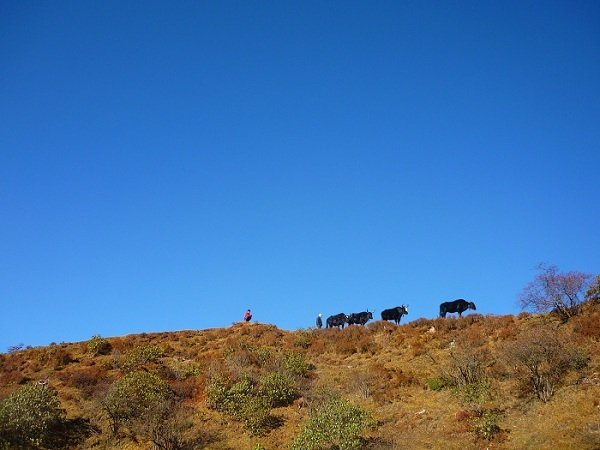
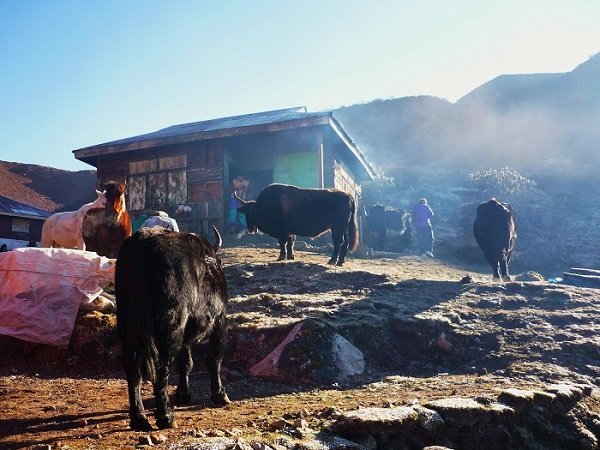
The day’s trek was relatively easy, with amazing views throughout. Thangshing (~3,900m) was a meadow at about the same altitude as Dzongri. The trail from Dzongri to Thangshing first descended about 300m to Kokchurong, followed by an approximate 300m ascent to Thangshing. We started our trek at 9am and reached Thangshing at 1.30pm. The total distance covered that day was about 9 km.
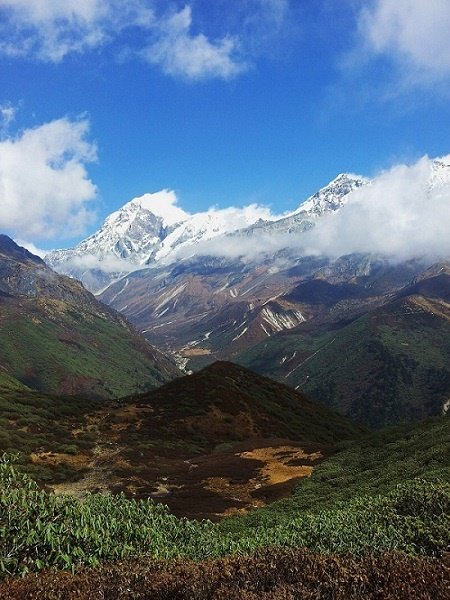
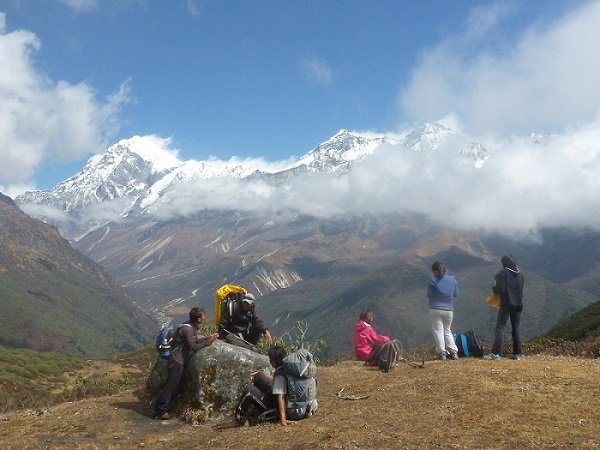
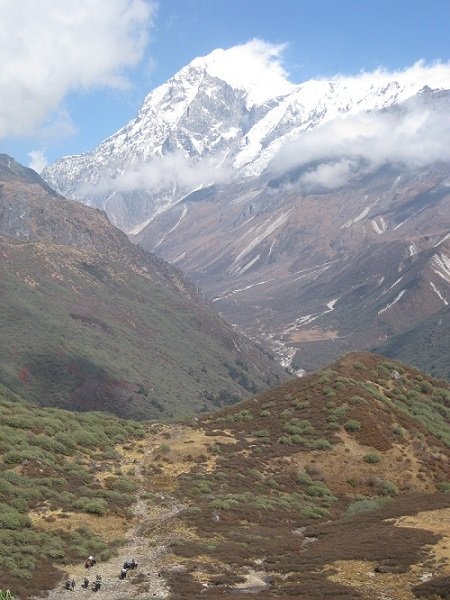
The first part of the trail passed through forests consisting of rhododendron, juniper, pine and fir trees. Once we emerged from the forest, we were greeted with the welcoming sight of Kokchurong (~3,600m) by the bank of the gushing Prek Chu River. At Kokchurong, there was a trekkers’ hut and a small campground. Kokchurong, being lower in altitude than Dzongri and Thangshing, seemed to be a better place to stay at night, at least psychologically more comforting for those who are afraid of the cold. However, the campground gets occupied very quickly, so you would have to plan on setting off early and reaching there well before the others.
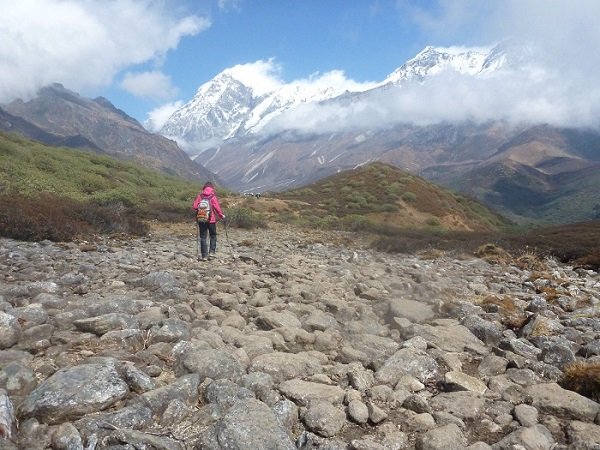

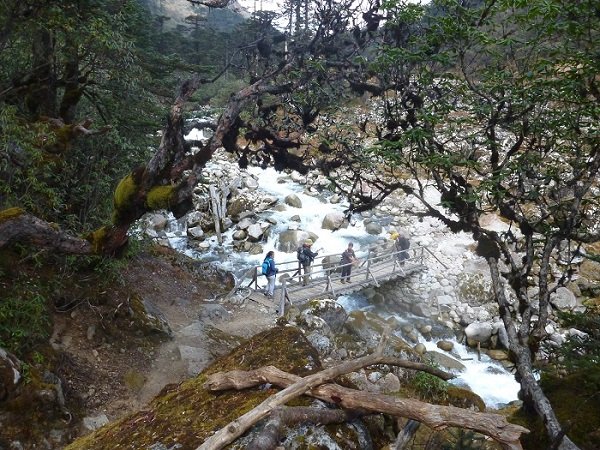
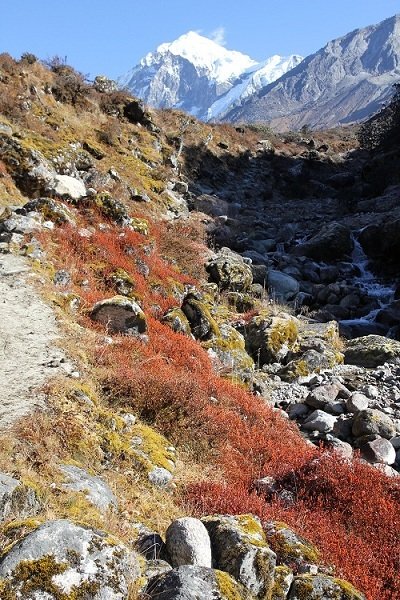
We crossed the Prek Chu River and trekked along its riverbank to get to Thangshing. This part of the trail was the wettest of all. There were many small streams and surface run-offs that flowed down from the hillsides towards the river. Some sections of this trail were also quite muddy. The riverbanks and the small pockets of islets in the river were covered with autumn-red vegetation. Fog, moss-green rocks and the surrounding coniferous trees further reinforced an Alice-in-Wonderland effect. Thangshing was located on a big flat meadow, as large as a few football fields, with a trekkers’ hut at the entrance. Due to the open space, the wind was quite strong. The night in Thangshing was probably the coldest, at -5 degrees Celsius. After dinner, we were served canned fruit cocktail for dessert. However, the meticulous cook made a point of warming it up before serving.

Day 7 (Thangshing – Lamuney)
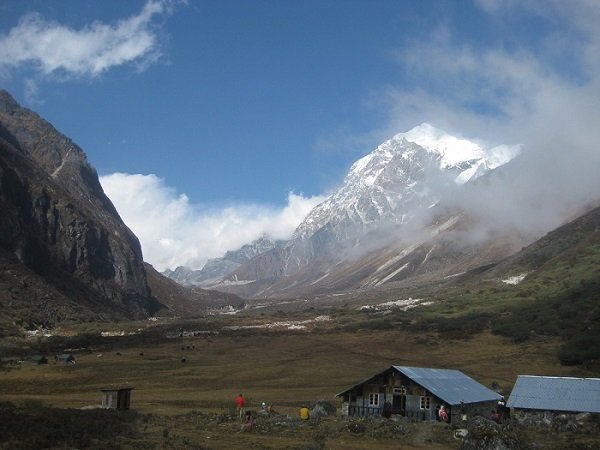
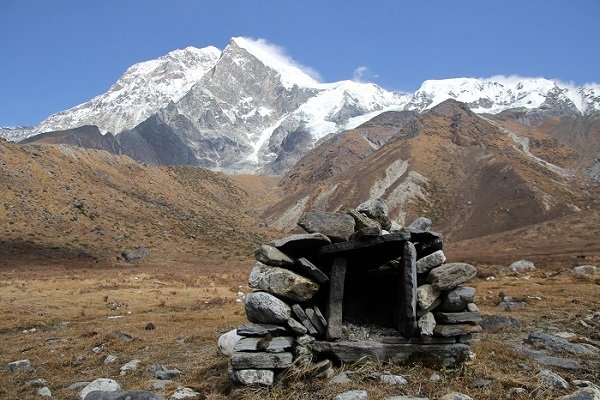
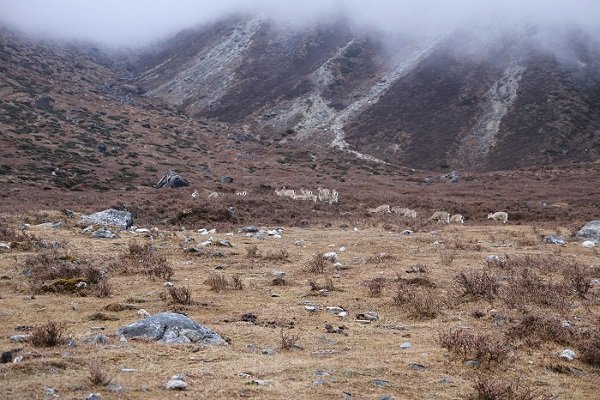
Today’s trek was one of the shortest and easiest. The distance from Thangshing to Lamuney (~4,100m) was about 4 km. We started off at about 9am and reached Lamuney before noon. Unlike the other campgrounds, there was no trekkers’ hut in Lamuney, but there was a stone dwelling for the yak herder with a zigzag entrance designed to shield against the wind. There were also many prayer stones engraved with the mantra “Om mani padme hum” scattered around the dwelling. Lamuney was the furthest place where camping was permitted along the trail to Goechala. Camping was not allowed beyond Lamuney. The highlights of Lamuney were the possibility of sightings of wild animals and snow. We saw a big herd of blue sheep (Bharal) grazing 200 metres away from our tents. They were pretty shy animals, scattering off into the mountains the moment they sensed my presence. The wind was very strong and we could feel the wind chill even inside our tents. We tried to break the wind by building “fortifications” around our tents – piling rocks around the exposed edges of the tents. This method proved to be quite effective. To our pleasant surprise, it started snowing at night.
Day 8 (Lamuney – Goechala and Samiti Lake – Thangshing)
Today was supposed to be D-Day for us. The original plan was to wake up at 2am for a four-hour trek to Goechala Pass for sunrise. However, seeing that most of us were still mentally unprepared for the cold and arduous trek, our guide suggested starting the trek at 5am instead, giving us three additional hours of sleep. However, this also meant that we would miss the sunrise and would only have enough time to trek to Checkpoint 1 of Goechala, as our schedule was very tight.

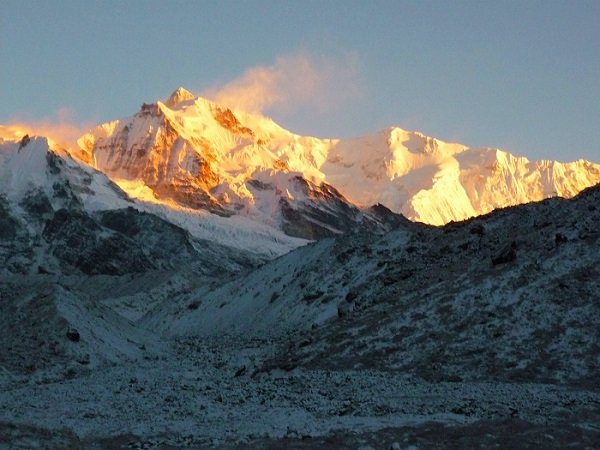
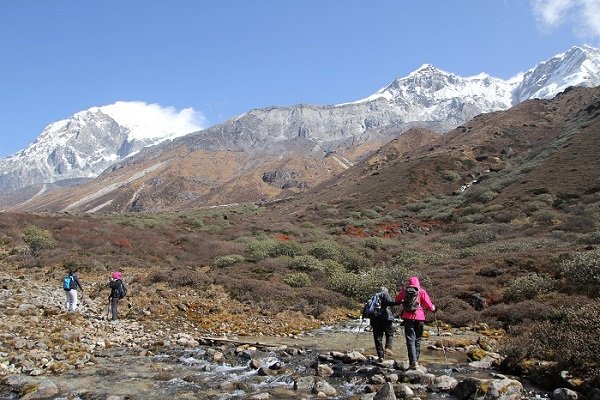
Our guide woke us up at 5am. By the time we started trekking, it was already bright daylight at 6am. The trail to Goechala was rocky and steep throughout. After trekking for nearly 30 mins, we reached Samiti Lake – a high-altitude glacial lake, fed by the surrounding glaciers, at 4,300m. The lake was turquoise-coloured, partially frozen and extremely still. The lake, though small in size, was beautiful and considered holy by the Sikkimese. There was an abandoned and dilapidated trekkers’ hut nearby. The Sikkimese government had banned camping in the area to prevent pollution of this beautiful lake.
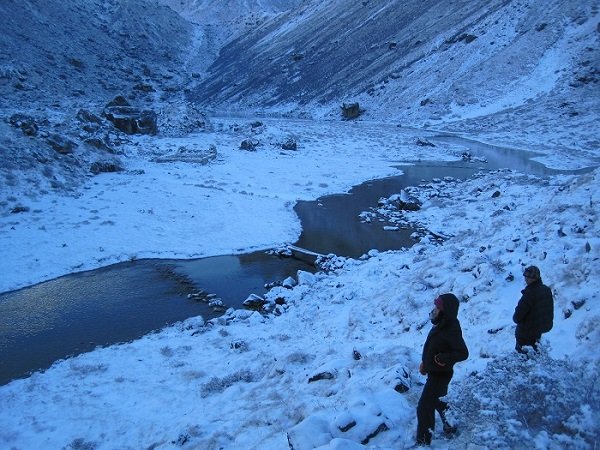
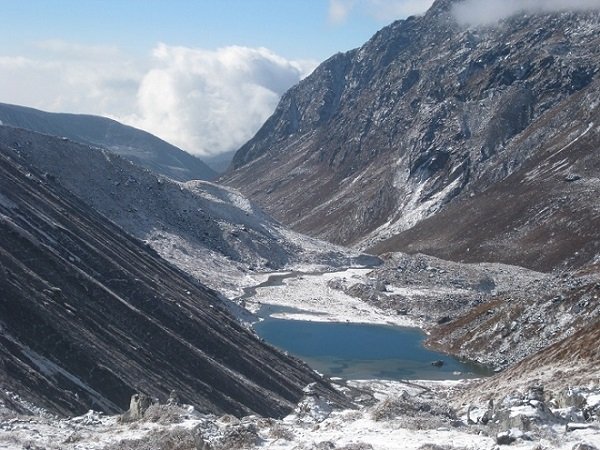
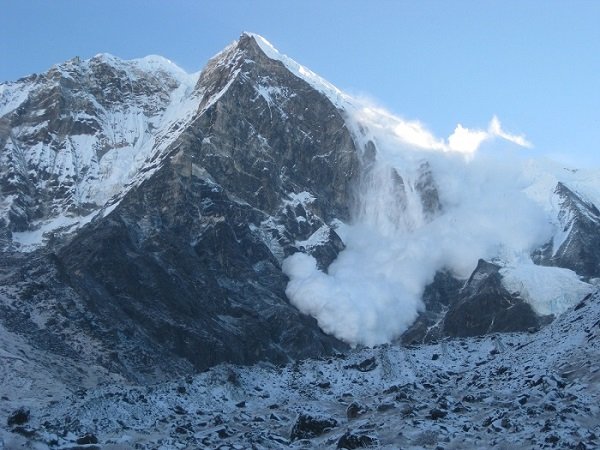
From Samiti Lake, we trekked for another one and a half hours to reach Checkpoint 1 (~4,600m). Along the way, we saw a mini snow avalanche on the slope of Pandim. We stopped for a few minutes for the tumbling snow to settle before carrying on.
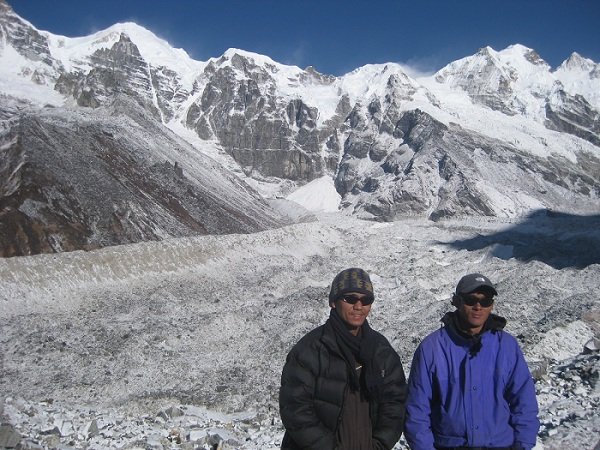
At Checkpoint 1, facing the direction of Goechala Pass, Pandim was on our right, the Zemathang Glacier was beneath us on our left, and across Zemathang was the eastern wall of Kanchenjunga. The entire scenery was grey with traces of white against the deep blue sky. Under the monotonously coloured landscape, everything looked much nearer than it actually was. The peak of Pandim was a good 2,000m above us, but it looked like I could easily walk there within 30 minutes.

From Checkpoint 1, it was another two hours to Goechala Pass via a narrow moraine trail – one and a half hours to Checkpoint 2, a.k.a. the False Checkpoint, and another half an hour to Checkpoint 3, Goechala Pass. We did not proceed to Goechala Pass, as we were exhausted and already satisfied with the view we saw. We turned back after spending about 45 mins around the area.

On our way back to the campground, we dropped by Samiti Lake to take a closer look at the beautiful lake. We made a mini snowman using twigs and stones to create its eyes and nose, and had an enjoyable time at the lake throwing snowballs at each other.


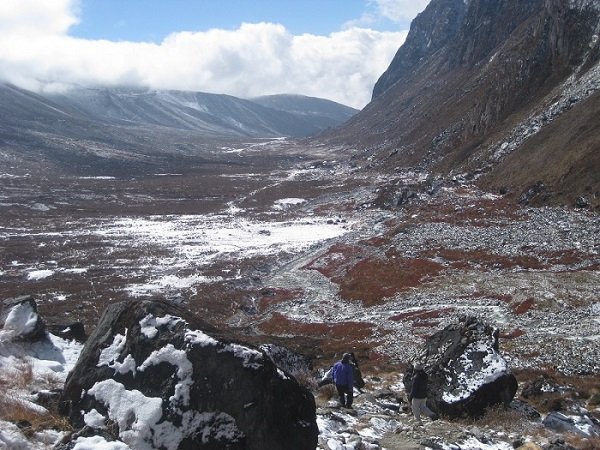
After breakfast, we set off on the return journey back to civilisation. We followed the route Thangshing – Kokchurong – Tshoka – Yuksom. From Thangshing, we would take a different route back, bypassing Dzongri to get directly to Tshoka. Initially, we planned to set up camp at Kokchurong for the night. However, when we reached Thangshing, we were informed by the housekeeper – there were housekeepers for the trekkers’ huts at Thangshing and Kokchurong – that Kokchurong was already fully occupied. The housekeeper had just returned from Kokchurong. We were very disappointed because we had been looking forward to camping beside the scenic Prek Chu River. Hence, we ended up spending yet another cold night in Thangshing.
Day 9 (Thangshing – Tshoka)
Today’s trek from Thangshing to Tshoka was a long and hurried one, as we had more distance to cover than originally planned. Our cook woke up earlier than usual that morning to prepare breakfast and packed lunches – vegetable calzone, boiled egg, boiled potatoes and apple – for us. To save time, the plan was for us to have our packed lunch at Deorali. At Deorali, we saw the same group of elderly Japanese trekkers enjoying freshly cooked meals while sitting at foldable tables and chairs. I presumed they must have been the group who occupied Kokchurong the night before. Looks like, in trekking too, the phrase “the early bird catches the worm” rings true.
At Tshoka, we rested at the cafe while waiting for our pack animals to arrive. Outside the cafe, a group of men tried to fix a new set of horseshoes onto a horse. It looked like a painful process, as it involved driving nails into the horse’s hooves. However, if done properly, it is not supposed to be painful at all. This is analogous to getting a manicure on a human fingernail, albeit on a larger scale.

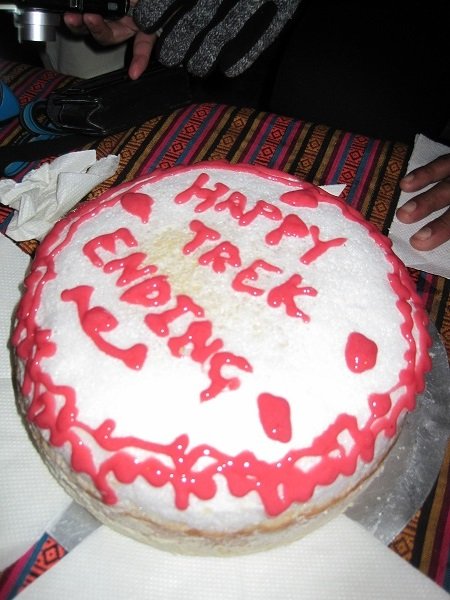
Tonight, we enjoyed our last dinner out in the field. As a farewell dinner, the cook baked a cake with icing words that read “Happy Trek Ending” for us. Whoever said that you need an oven to bake a cake? Our guide also bought us a jar of homemade millet beer from the cafe. The beer, called Tongba, was consumed in a unique way. The fermented millet was put into a bamboo container, or jug, and boiling water was then poured into it to the brim. It was left undisturbed for five minutes, after which the beer could be drunk directly through a bamboo straw. As the beer was drunk, more boiling water was poured into the jug until the alcohol was depleted. According to our guide, the remaining millet from the beer would eventually be fed to the horses. Unfortunately, I am a poor drinker who doesn’t know much about alcohol, but to me, Tongba tasted more like red wine than beer. It did taste quite nice, but we didn’t finish it for fear of a hangover the next day.

Our guide, porters and yak man sang some Nepali folk songs, including the popular trekking song – Resham Firiri – for us. We were dumbfounded when our guide requested that we sing some Singaporean folk songs. Singapore, being a young country, does not really have many catchy or original folk songs. We do have a genre of songs called “Xinyao” that is unique to Singapore, but sadly, none of us could remember any of the lyrics. To satisfy our audience, we ended up singing some Hong Kong pop songs instead. Our guide and his helpers must have been puzzled as to why it took us so long to sing, as singing seemed to be second nature to them. It was definitely an awkward moment for us then.
Day 10 (Tshoka – Yuksom – Darjeeling)
Today’s journey was a super-long one – a five-hour trek to Yuksom followed by another four-hour jeep ride to Darjeeling. Like yesterday, our cook woke up earlier to prepare breakfast and packed lunches for us. After breakfast, we thanked the guide and his helpers personally and also gave them tips for their hard work. As for the horses, we had nothing to give except our apples, which they munched away happily. We forgot about the dzos though… Anyway, they did not look very approachable.


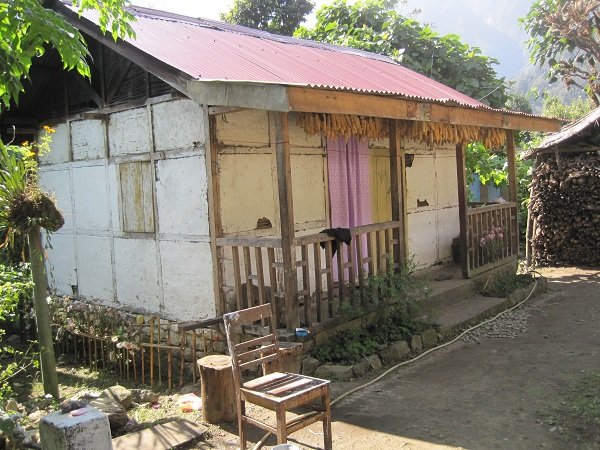
We had a quick lunch beside a waterfall. The first sign of civilisation that we saw was the village huts at the edge of Yuksom. For once, our guide seemed happier than us, for he uttered a loud, happy cheer when he saw the village fences. He, his wife and children lived there and operated a small business – a trekkers’ cafe in Yuksom. It was Home Sweet Home for him. For us, we were looking forward to our hotel in Darjeeling, where we could finally enjoy a proper hot shower and comfortable bed.
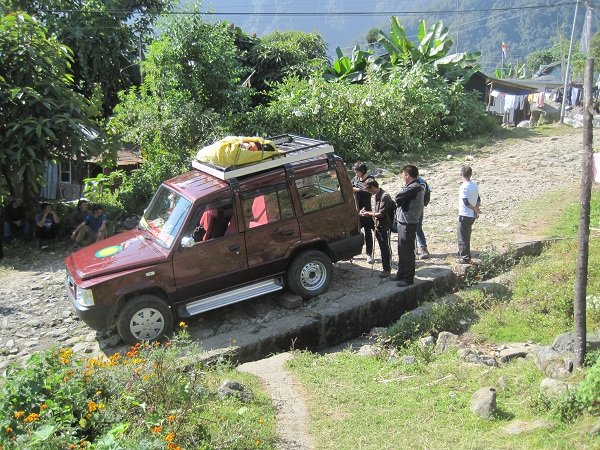
The jeep was already loaded with our luggage and waiting for us by the road when we reached the pick-up point in Yuksom. The pack animals carrying our baggage had reached Yuksom well ahead of us. We boarded the jeep and embarked on a super-winding journey to Darjeeling. It was already nightfall when we reached our hotel – Kasturi Palace. The hotel was rather disappointing. The shower tap had come loose, and I had to use my Swiss Army Knife to fix it. Furthermore, the water heater capacity was small, resulting in our hot shower turning cold after a short while. The hotel cafe was closed by the time we got there. We were too tired and lazy to look for food outside the hotel and settled for cup noodles and canned food which we had brought from home.
Day 11 (Darjeeling – Bagdogra – Kolkata – Singapore)
After having breakfast of toast and cornflakes in the hotel, we checked out and boarded a jeep provided by the tour agency for Bagdogra Airport. Our flight to Kolkata was at 2pm. The distance from Darjeeling to the airport was only 95 km, but the driver insisted on picking us up at 8am even though we had requested a later pick-up time.
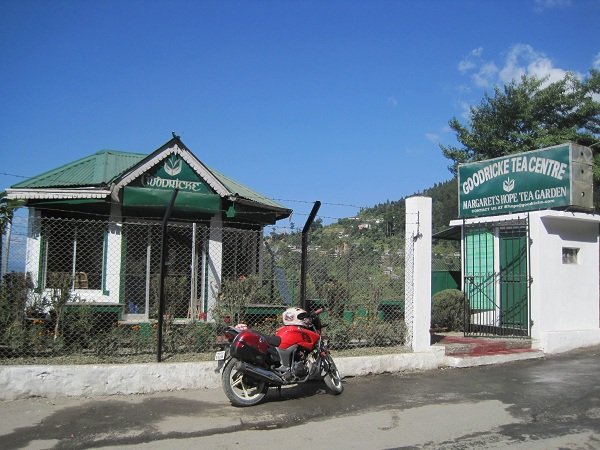
Hence, the only Darjeeling we saw was through the jeep’s windscreen and windows. However, the driver did bring us to Margarets Hope Darjeeling Tea Estate, one of the many tea estates in Darjeeling, which we passed along the way, to buy some Darjeeling tea to bring home. We bought some good-quality tea at INR 100 per 100g. We tried the tea back home and it was really good. Tea of similar quality would have cost us at least three times as much back home.
It took us four hours to travel down from 2,250m Darjeeling to 130m Bagdogra. We eventually reached the airport around noon. Luckily, we did not insist on a later pick-up time or we would have missed our flight. After collecting our boarding passes, we headed to the airport restaurant for lunch. The restaurant was very crowded. We ordered Masala Butter Chicken and Chinese Fried Rice – interestingly, no matter where you go, this dish always seems to be easily available. The Masala Butter Chicken was one of the best I have ever tried.
Our SpiceJet flight, unlike Jet Airways, did not provide any refreshments. I was looking forward to a nice Indian dinner in Kolkata but ended up having exorbitantly priced cup noodles instead. Our flight arrived in Kolkata at around 4pm. After collecting our checked-in luggage, we exited the domestic airport and walked 10 minutes down the main road to the international airport.
As our connecting flight to Singapore was at midnight, we were thinking of visiting Kolkata city for a couple of hours. To our astonishment, there was no luggage-deposit facility or service available at Dum Dum Airport. Mind you, it was an international airport that we were talking about here. Bearing in mind our baggage, we decided not to venture out of the airport.
The airport was really small. Within the main building, before the departure check-in hall, there was only a convenience shop, a bookshop and a restaurant. To kill time, we went to the restaurant for a drink. The restaurant was the total opposite of the one we had visited at Bagdogra Airport earlier. There were only a few souls inside. We stayed in the restaurant for almost three hours until we felt that it was time for us to enter the check-in hall.
Unfortunately, we were barred from entering the check-in hall. The reason provided was that the gate for our flight was not yet open. We repeatedly tried to bargain with the security officer for entry but to no avail. We ended up waiting for another two hours outside the check-in hall. It was already 9pm when we were finally allowed in.
Till now, we still do not understand the logic of the security staff keeping us outside the check-in hall. We thought that this was the last hiccup, only to be informed by the check-in staff that our boarding passes could not be issued because they had lost our records in the computer system. A few other passengers were also affected. We waited for another 30 minutes for them to resolve the issue.
After finally checking in our luggage and getting our boarding passes, we felt that it was time for dinner. However, the only shop available in the check-in hall was a snack shop. The snacks did not look very appetising, so I bought cup noodles to eat instead. Guess what? The cup noodles were masala-flavoured. I did get to “enjoy” my last Indian cuisine after all.
Despite all the waiting and hiccups, our flight departed for Singapore on time. It was finally: Home Sweet Home.
During the last two days of our trip, we encountered India as it is in reality: crowded, polluted and full of inefficient bureaucracy. Singaporeans have become so used to – pampered by, perhaps? – the living conditions in developed countries that we exhibit the slightest intolerance and impatience towards any sort of inefficiency, be it at home or overseas. Subconsciously, we have taken efficiency as the natural rhythm of life.
We were especially vexed when the other party expressed indifference towards or was helpless in addressing our complaints. Despite all the reminders to look at things from other people’s perspectives, we still fail to truly understand and appreciate that culture and the pace of progress are not the same everywhere.
Something for us to ponder upon…