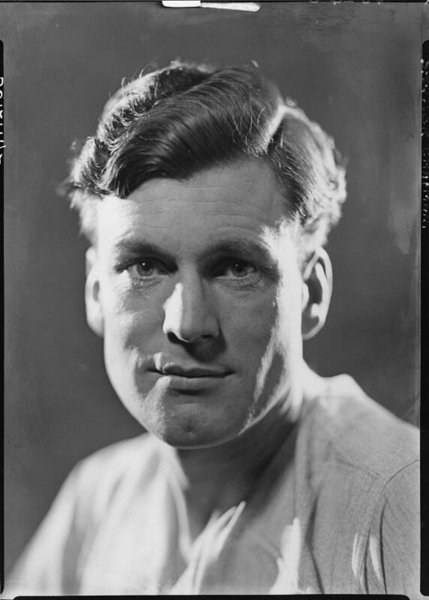
I first came across Freddie Spencer Chapman while reading about the British Arctic Air Route Expedition, led by Gino Watkins. As I read about the expedition members, I discovered that Chapman was also a Himalayan explorer and mountaineer. He had accompanied a British diplomatic mission to Tibet and, together with Pasang Dawa Lama, made the first ascent of Jomolhari, on the border between Bhutan and Tibet, in 1937. Below is a portrait of Chapman. His broad, angular face, strong jawline and steady gaze give the impression of a man who is tough both physically and mentally.
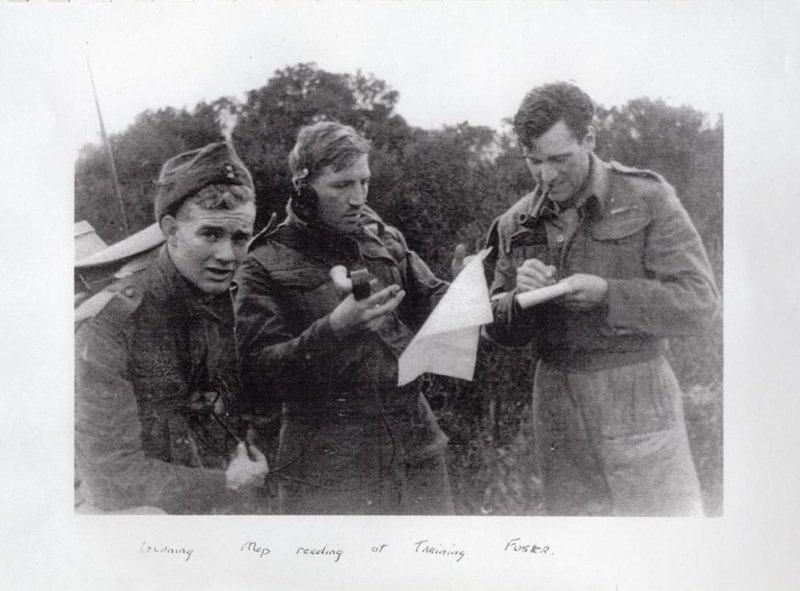
I did not pursue his story much further at the time. A few years later, while researching Force 136 during World War II, I came across his name again. It sounded familiar, and then it clicked: this was the same Arctic and Himalayan explorer I had read about years earlier.
As someone interested in both mountaineering and World War II history, I was naturally drawn to a person whose life connected these two interests. That led me to read his wartime memoir, The Jungle Is Neutral.

Born in London in 1907, Chapman lost both parents at a young age and grew up in the Lake District. He later won a scholarship to St John’s College, Cambridge, where he studied history and English. His love of the outdoors took him to Greenland and the Himalayas before the war brought another kind of adventure. He joined the British Army and was posted to Singapore in 1941, where he became involved in training men for guerrilla warfare and sabotage.
The Jungle Is Neutral recounts the more than three years he spent behind Japanese lines in occupied Malaya. Its title reflects his belief that the jungle itself is neither friend nor enemy. It presents dangers and opportunities to everyone; survival depends on understanding the environment and learning to adapt to it.
When Chapman arrived in Singapore, he believed that resistance groups should be prepared in case Malaya fell to the Japanese. His proposals, however, received little support until the invasion was already underway.
As Japanese forces advanced through Malaya, he went behind their lines to gather intelligence. He was struck by their speed and mobility, with many soldiers travelling on bicycles and carrying relatively little equipment. At the same time, he recognized that their extended supply routes offered opportunities for small groups to attack and disrupt them.
Together with two other British, Chapman carried out sabotage operations around a small town in Perak. With help from a local Chinese mine owner, they attacked railway lines, bridges and vehicles. It was remarkable how much disruption such a small group could cause. But with the fall of Singapore, there was no longer a British front for them to return to.
Stranded in occupied Malaya, Chapman initially considered trying to escape to India. Instead, he established contact with Chinese communist guerrillas who continued to resist the Japanese. Much of the book follows his movements between their camps in Perak, Selangor, Pahang and Negri Sembilan.
He helped train guerrillas in weapons handling, demolition and jungle warfare. Through his encounters with the Malayan Peoples’ Anti-Japanese Army, including figures such as Chin Peng, the book offers glimpses into the organisation, relationships and tensions within the resistance. Chapman admired the fighters’ courage and determination, but he was also frustrated by political disagreements, poor communications and the prolonged lack of contact with British headquarters.
After almost two years of isolation, Chapman finally linked up with John Davis and Richard Broome, who had returned to Malaya by submarine as part of Force 136. Working with Chinese agents recruited through Lim Bo Seng, they sought to establish communications with Allied headquarters and coordinate resistance activities with the guerrillas.
As a Singaporean reader, I was particularly interested in the references to Lim Bo Seng. I noticed that Chapman referred to him by his full name, while many other Chinese figures appeared under shorter names or aliases, such as Ah Kow. His account of Lim Bo Seng is brief but respectful, and I came away with the impression that he held him in high regard. The book does not, however, give much detail about their personal relationship.
This renewed connection with the outside world was fragile. Japanese arrests disrupted the network, and Lim Bo Seng was captured and later died in captivity. Chapman and his companions again faced a long period of uncertainty and isolation.
One of the most extraordinary parts of the book follows Chapman’s journey into the mountains of Perak to look for another British officer who had gone missing. During this expedition, an armed Chinese group detained him, but he managed to escape. Later, he stumbled into a Japanese camp and was captured again.
He escaped from the Japanese during the night, only to find himself alone in mountainous jungle without his equipment, compass or medicine. What followed was a desperate struggle through unfamiliar terrain, with hunger, malaria and infected wounds making every journey harder. Eventually, with help from Chinese villagers and guerrillas, he found his way back to his companions. He had been away for more than 100 days.
For much of the following year, Chapman and the other British officers stayed in a remote camp near the Telom River. They were relatively sheltered from Japanese attacks, but poor nutrition, recurring illness and the inability to communicate with Allied headquarters made life deeply frustrating.
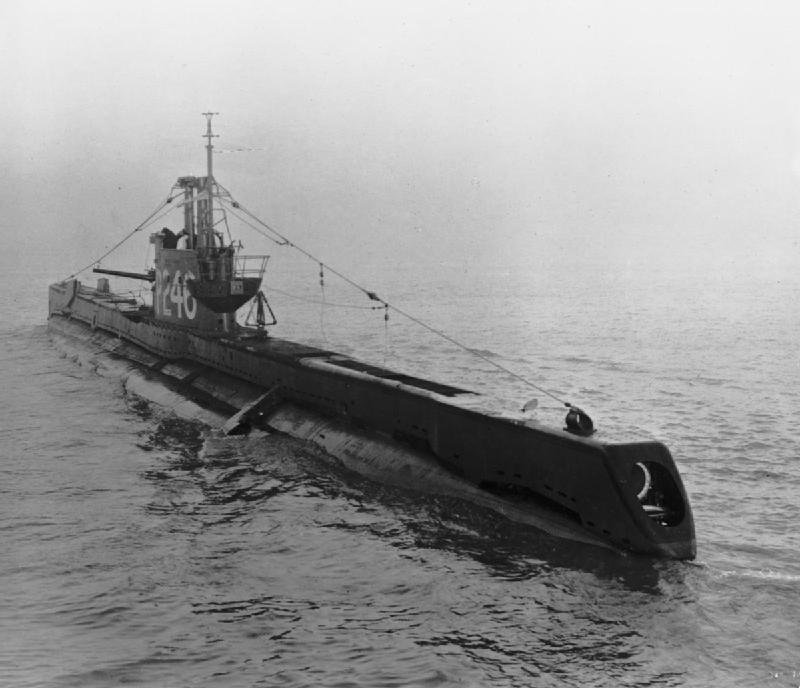
Eventually, wireless contact with Colombo was restored. Chapman left Malaya by submarine in May 1945, ending more than three years behind Japanese lines. He later returned by parachute as the war drew to a close, assisting with the British return to Malaya. What a way to leave Malaya and return—first by submarine, then by parachute! The adventurous side of me wishes I could experience something like that myself
The photo below shows HMS Statesman, the submarine that evacuated Chapman from Malaya in 1945.
What stayed with me was how much his survival depended on local people. Chinese guerrillas and villagers, Malay villagers and Orang Asli communities provided food, shelter, information and guidance. His endurance was extraordinary, but he could not have survived on determination alone. The people who helped him were essential to his story.
There are also smaller details that make the book interesting beyond its military history. Chapman describes using the stars and other natural signs to find his way, hunting animals for food, and encountering wildlife in the jungle. His accounts include pigs, deer, monkeys and turtles, as well as encounters with bears and tigers. Even amid illness and uncertainty, books sometimes found their way into the camps, and he read whenever he had the opportunity. I found it rather surprising that reading could still be part of life under such conditions.
As a mountaineering enthusiast, I also found it interesting that a man who had climbed in the Alps and Himalayas ended up crossing the tropical mountains of Malaya under such different circumstances. As a hiker myself, I have climbed less well-known mountains such as Gunung Stong and Mount Mulu. Even with a guide and relatively well-trodden trails, I found these treks challenging enough. I can hardly imagine what it must have been like for Chapman to cut his own path through dense jungle and find his way with so little food and drinking water.
That said, this was not an easy book for me to read. First published in 1948, its English often feels old-fashioned, and the long descriptions of routes can be difficult to follow. There are so many trails, rivers, villages and camps that I frequently lost track of where he was or why he was heading somewhere. At times, I felt almost as lost as he was in the jungle. I had to reread passages to understand the sequence of events, and some stretches required quite a bit of patience.
His personality also comes through strongly. I cannot remember reading another book in which I noticed the words “stupid” and “intelligent” so often. He could be quick to dismiss one person as foolish and praise another for being clever. I got the impression that he took considerable pride in his intellectual abilities and Cambridge background. At times, he came across as a little arrogant, although that also made him an interesting person to observe through his own writing.
Some of his generalizations about Chinese, Malay and Tamil people also stood out. A few remarks may have been intended humorously, but they can sound patronizing or derogatory to a reader today. They reflect the attitudes of his time, while also reminding me that this is one British officer’s perspective on the people around him.
There were moments when I wondered whether some of the more extraordinary adventures had acquired a little extra colour in the telling. Interestingly, his former expedition companion Quintin Riley recalled in a 1972 Polar Record obituary that, when Chapman described a journey or hunting trip in Greenland, his companions would jokingly “divide by two and call it nearly”. Riley added that Chapman always took the remark in good humour.
I found that an amusing glimpse of the man rather than a reason to dismiss his memoir. It does not establish that any particular wartime episode was exaggerated. Whatever questions a reader might have about individual details, surviving for more than three years in occupied Malaya remains an extraordinary achievement.
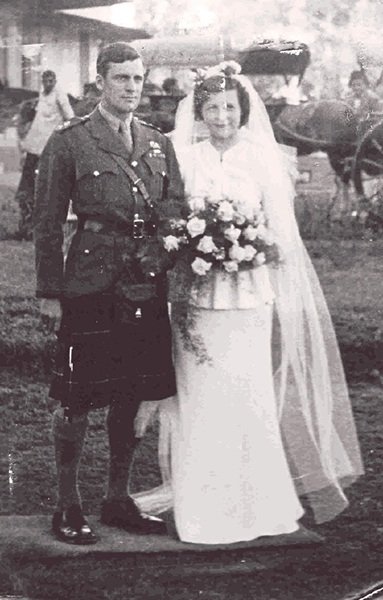
After the war, Chapman married and had three sons. He returned to education, serving as a headmaster in Germany and South Africa before eventually becoming warden of Wantage Hall at the University of Reading.
His later life had a sad ending. Troubled by deteriorating health and persistent pain, he died by suicide in 1971 at the age of 64. In a note to his wife, he expressed his fear of becoming an invalid whom she would have to nurse. I found this particularly sad after reading about everything he had endured during the war. His extraordinary physical resilience had not made him immune to suffering later in life.
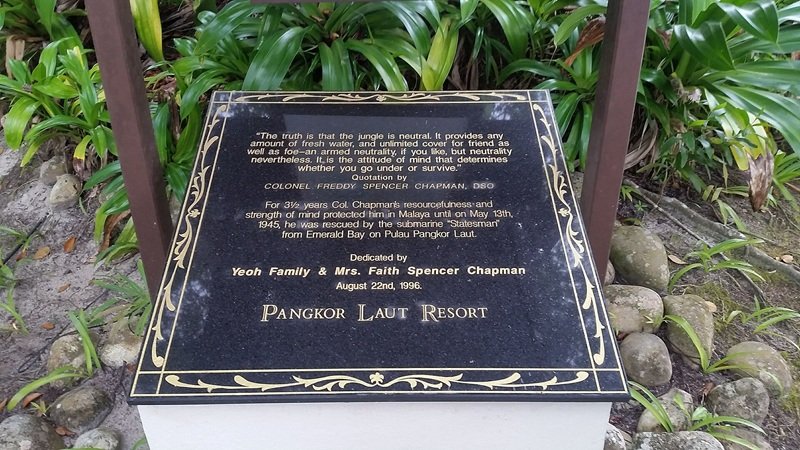
Today, his name lives on in The Chapman’s Challenge at Pangkor Laut Resort in Malaysia. The event combines a 3.8 km road run, a 2.4 km jungle trek and a 1 km open-water swim, commemorating his wartime escape by submarine near Pangkor Laut. The next edition is scheduled for 28–30 May 2027, with details on the official event page. It seems a fitting tribute to someone whose life brought together exploration, endurance and adventure.
Times have changed. Some mountains and jungles that once required difficult exploration are now crossed by marked trails, with hikers and trail runners following routes that earlier travellers had to work out for themselves. Reading Chapman’s story made me think about how differently he experienced these landscapes: first through curiosity and adventure, and later through the urgent need to stay alive.
For me, that connection between explorer, mountaineer and wartime survivor is what makes him so fascinating. I struggled with parts of the book, but I finished it with a strong sense of having encountered a remarkable, complicated man who had lived an exceptionally full life.