Bukit Brown Cemetery (aka Kopi Sua or Coffee Hill) was officially set up as a public Chinese burial ground on 1 January 1922. It remained open for more than half a century until its closure in 1973. There are about 100,000 graves in an area of approximately 200 hectares.
The cemetery was named after its first owner, George Henry Brown, a shipowner, trader and broker who arrived in Singapore in the 1840s. The land was later bought by Ong Kew Ho and the Hokkien Huay Kuan, who gave it to the Ngee Ann Kongsi. To meet the pressing need for more Chinese burial grounds, the Municipal Government acquired a section of the land and converted it into a public cemetery. By 1929, Bukit Brown Cemetery accounted for about 40 per cent of all officially registered Chinese burials within the municipal (city) limits.
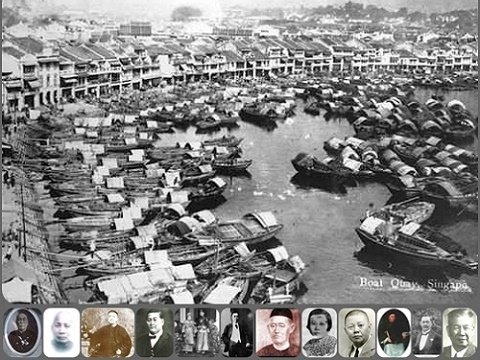
Many well-known and prominent Singaporeans are interred at Bukit Brown Cemetery. They include Lim Chong Pang (Chong Pang Village), Gan Eng Seng (Gan Eng Seng School), Ang Seah Im (Seah Im Road), Chew Boon Lay (Boon Lay Town), Cheang Hong Lim (Hong Lim Square) and Chew Joo Chiat (Joo Chiat Road). The grandfather (Lee Hoon Leong) and aunt (Lee Choo Neo) of Singapore’s first Prime Minister, Lee Kuan Yew, are also buried at Bukit Brown.
Bukit Brown is also “distinguished” for having some of the oldest and biggest graves in Singapore. The oldest grave in Bukit Brown dates back to as early as 1833. The headstone belongs to a man called Fang Shan, who died in 1833. The tomb of Ong Sam Leong and his wife is said to be the largest tomb in Singapore. It is as big as a few Housing and Development Board (HDB) flats.
Over the decades, Bukit Brown has evolved into a rich ecosystem. Many species of birds can be spotted there, including migratory and endangered ones. However, there are plans by the government to clear the cemetery for new development. A shell MRT station (Bukit Brown MRT Station) was already built in the area. Construction of a new road cutting through the cemetery will also begin in 2013. In fact, the whole area has been earmarked as a future new town by the Urban Redevelopment Authority (URA). Conservationists object to this, saying that the area is rich in heritage and biodiversity.
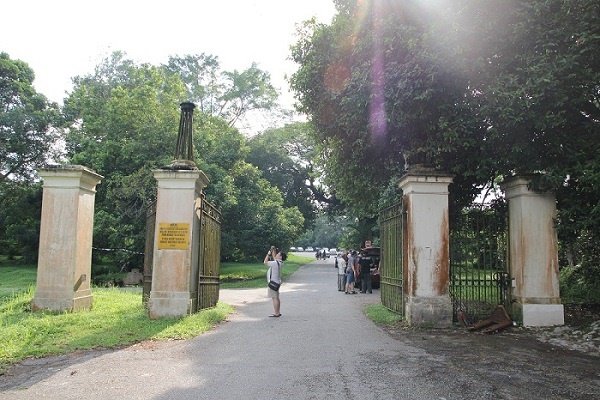
The above is the main entrance to the cemetery. The yellow sign on the pillar reads, “The main gate of this cemetery will be locked daily at 5.30pm from Monday to Saturday….” The fencing along the perimeter of the cemetery is long gone. I suppose no one locks the gate anymore.
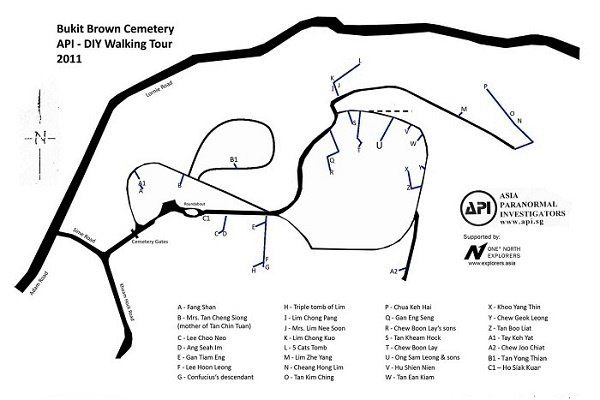
There are a few groups (Nature Society, All Things Bukit Brown, API etc.) that organise guided tours of Bukit Brown. The above map from API shows the layout of Bukit Brown and the grave locations of its prominent residents. There are also directional signs left behind by API along the trails that indicate the grave locations.
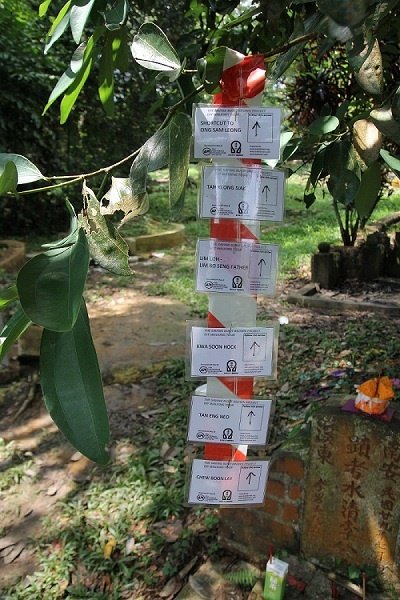
Some of the well-known residents buried here are:
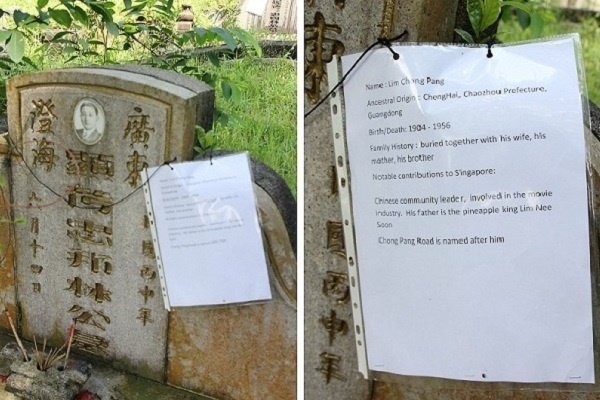
Lim Chong Pang (b. 6 June 1904, Singapore; d. 21 July 1956, Singapore) was a prominent businessman and long-time member of the Singapore Rural Board. Chong Pang Village and Chong Pang Road (both expunged) were named after him. He was the second elder son of Lim Nee Soon.
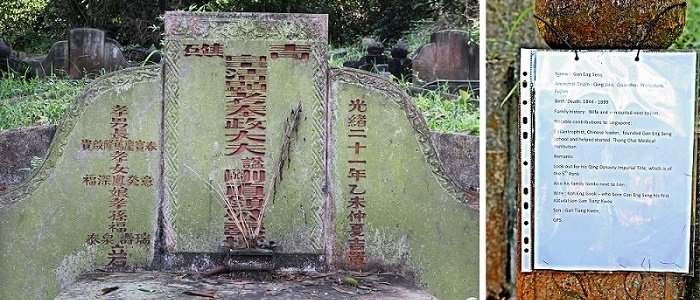
Gan Eng Seng (b. 1844, Malacca; d. 9 September 1899, Singapore) was a Chinese community leader, labour contractor and landed proprietor of early Singapore who contributed considerably to charities such as hospitals and schools. Gan Eng Seng School is named after him. He possessed a Qing Dynasty imperial title of the fifth rank.
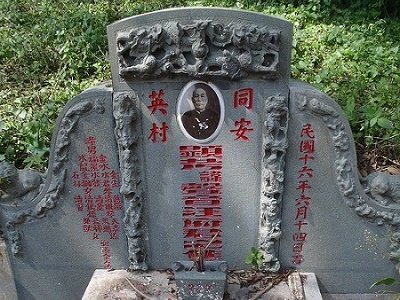
Ang Seah Im (d. 1927, Singapore) was a Chinese community leader who had businesses in mining, rice, rubber and trading. He owned properties in Malaysia and Singapore, especially along Telok Blangah Road. Seah Im Road was named after him.
Chew Boon Lay (b. 1851 or 1852; d. 2 June 1933, Singapore) was one of Singapore’s early pioneers. He bought acres of marshland and jungle in Jurong, which he converted into pepper and gambier plantations, and later rubber plantations. The Boon Lay housing estate and its Mass Rapid Transit station are named after him. His grave looks relatively new, probably a sign that it was refurbished by his descendants.
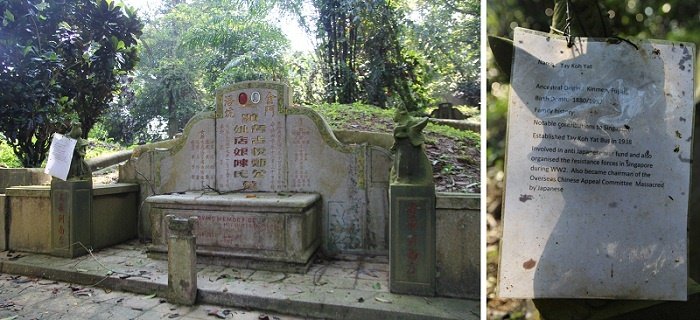
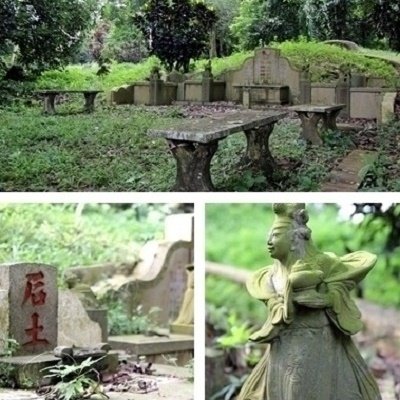
Tay Koh Yat (b. 1880; d. 1975, Singapore) was a pioneer in Singapore’s public transportation and a feisty patriot who set up a defence force during the onset of the Japanese Occupation of Singapore in World War Two. He started the Tay Koh Yat Bus Company, one of the largest bus operators before the era of Singapore Bus Service (SBS). When he died, a huge procession of 100 buses, lorries and cars followed his hearse. His grave is one of the most “visitor-friendly” in Bukit Brown. There are stone benches, which form part of the grave structure, in front of the tombstone, probably for visitors to sit down and rest after the long walk into the cemetery.
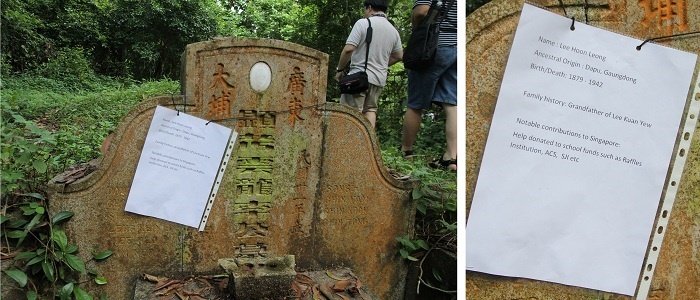
The grave of Lee Hoon Leong (b. 1879; d. 1942, Singapore), grandfather of Lee Kuan Yew, is a rather nondescript one. If one did not know better, one would probably just give it a cursory glance and walk past it. The grave is surrounded by overgrown vegetation and it seems that upkeep has not been carried out for quite some time. Lee Hoon Leong had risen to riches but saw his fortunes decline during the Great Depression in the 1930s.
Chew Geok Leong (d. 1937, Singapore) was a Chinese physician who opened a TCM clinic in a Geylang Serai shophouse. He had prepared his coffin, tomb and Sikh statues while he was still alive and kept them in one of his servant’s rooms. The Sikh statues are shown carrying rifles, with puppies beside them.
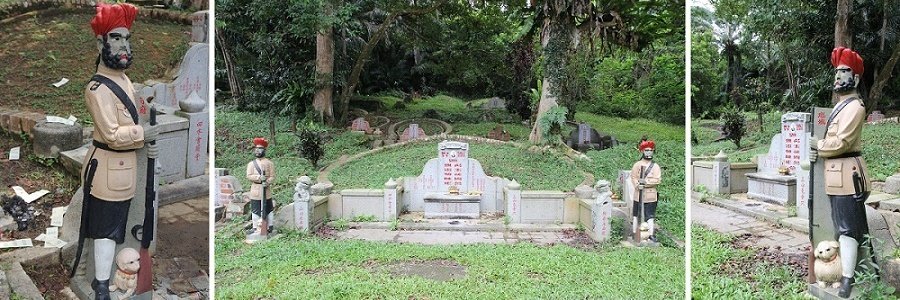
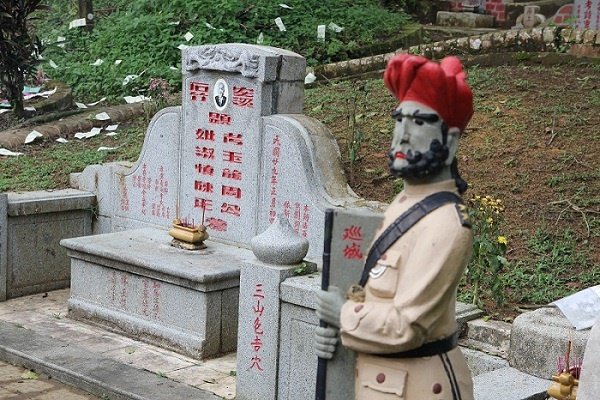
Some of the more elaborate graves in Bukit Brown also have Sikh statues guarding both flanks of the graves. During British colonial times, large numbers of Sikhs were recruited from India to Singapore to help maintain peace and order. They were considered well suited for the job because of their physical build, distinctive bearded appearance and reputation for bravery. Anyone who is not familiar with British colonial history may be completely puzzled by the presence of Indian statues at Chinese graves.
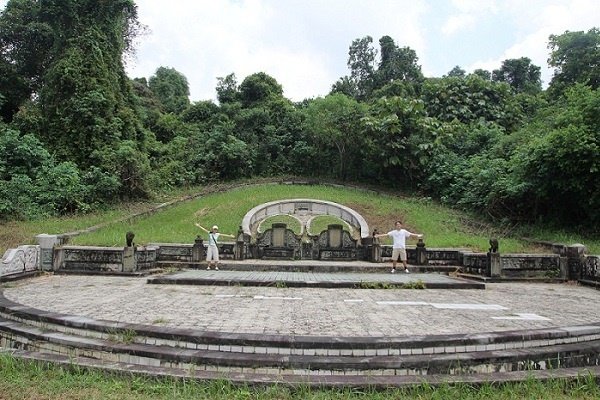
The grave of Ong Sam Leong (b. 1857, Singapore; d. 7 February 1918, Singapore) is the largest one in Bukit Brown Cemetery. It is as big as a few five-room HDB (Housing and Development Board) flats. Interestingly, the actual location of this tomb was only rediscovered in 2006 by Tan Beng Luan, who was then a former employee of the National Archives.
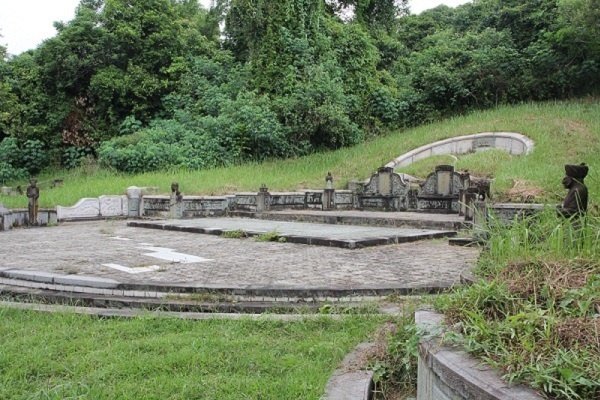
Ong Sam Leong made his fortune as the sole contractor supplying mining labour to phosphate-rich Christmas Island, which used to be part of Singapore until 1957. Sam Leong Road in Jalan Besar was named after him. His son, Ong Boon Tat, was also a prominent businessman and Boon Tat Street was named after him. Together with his brother, Ong Peng Hock, they started the New World Amusement Park at Jalan Besar before selling it to the Shaw Organisation in the 1930s. The park eventually closed in 1987.
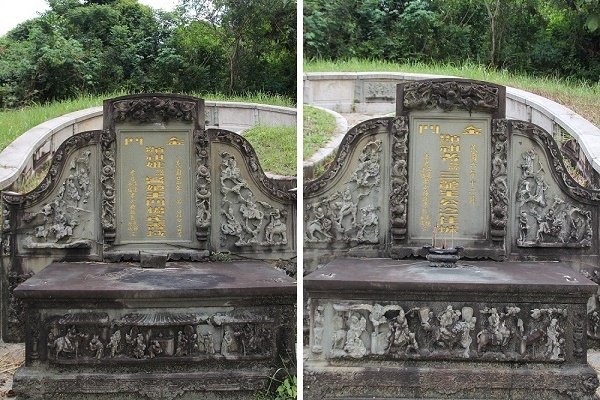
Ong Sam Leong and his wife, Yeo Hean Neo, were buried beside each other. Ong Sam Leong died at the age of 60 in 1918. His wife died in 1935 at the age of 73. The above right and left photographs show the tombstones of Ong Sam Leong and his wife respectively.
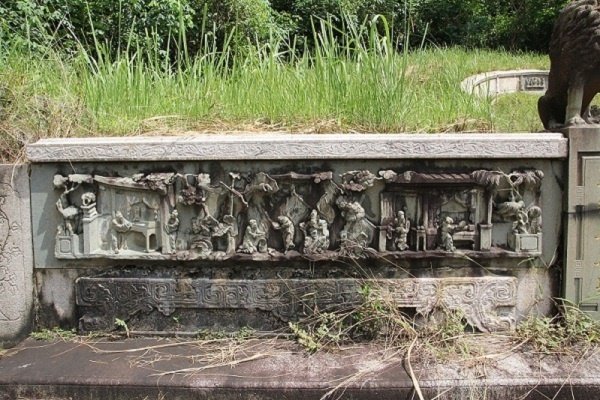
The tombstone of Ong Sam Leong has many intricate figurines and carvings depicting Chinese fables and mythology, such as the “Twenty-Four Examples of Filial Piety”, the “Eight Immortals” and “Fu Lu Shou”.
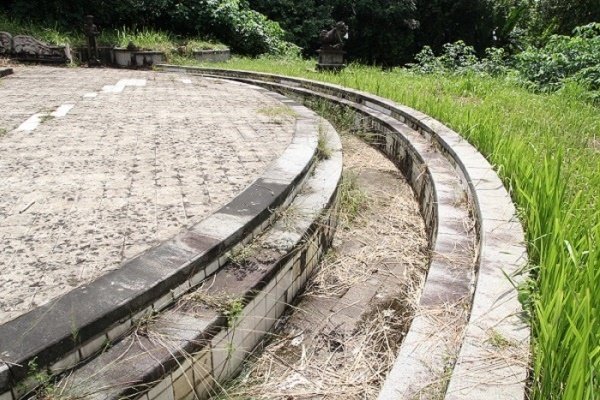
The moat of the grave is so wide that you can easily lie flat inside it. It is about knee-deep.
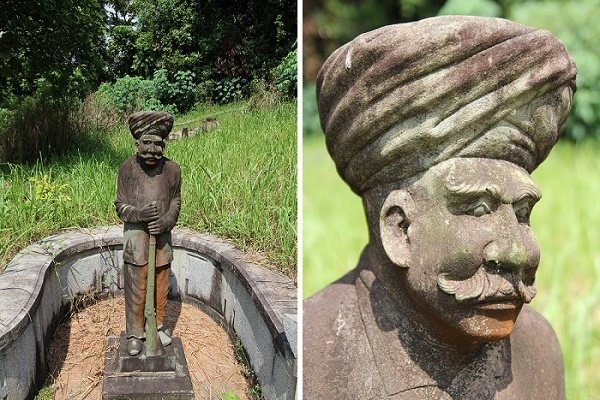
Two Sikh guards and two stone lions provide protection to the grave. These sculptures are more than two metres in height.
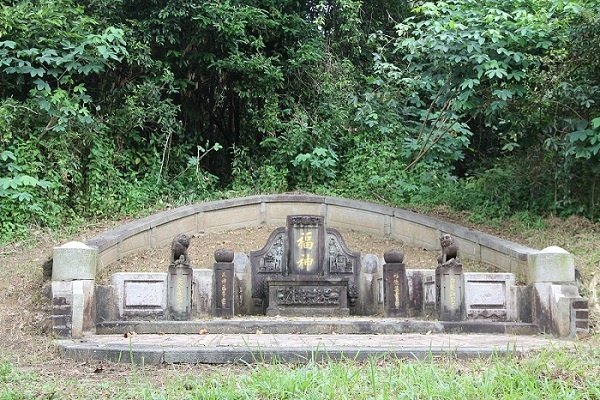
The earth deity shrine, which is believed to bring good fortune, prosperity and safety, is usually only the size of a few bricks at most graves. The one at Ong Sam Leong’s grave shown above is even bigger than many of the graves in Bukit Brown.
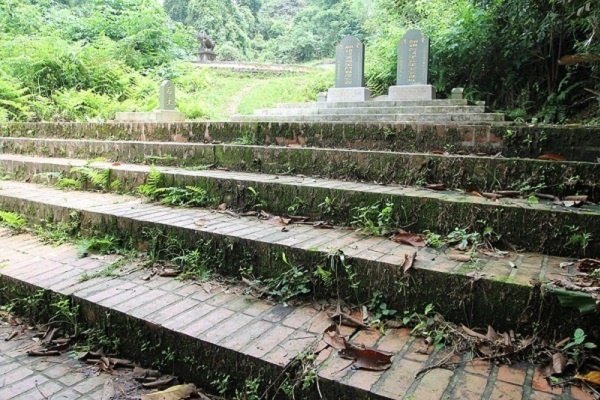
A flight of stairs leads up to the Ong family graveyard. It is probably the only place in Bukit Brown with such a staircase. But to reach it, one has to climb some distance uphill and bash through some vegetation.
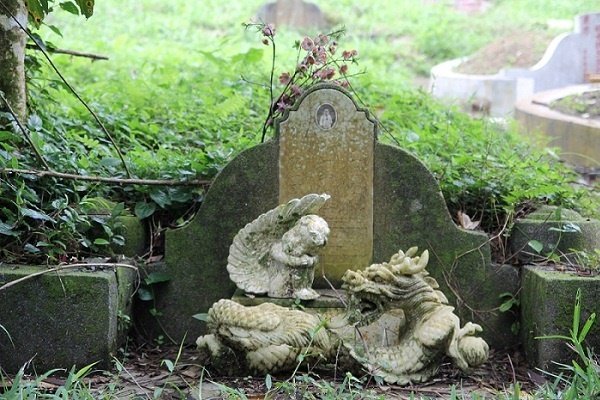
The grave above is that of a little boy. The front of the grave is adorned with a cupid and a Chinese dragon sculpture — a fusion of East and West.
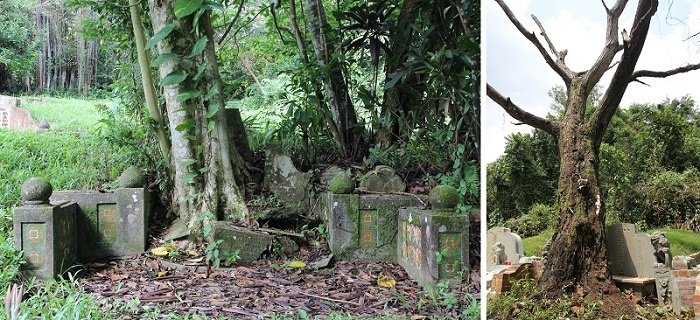
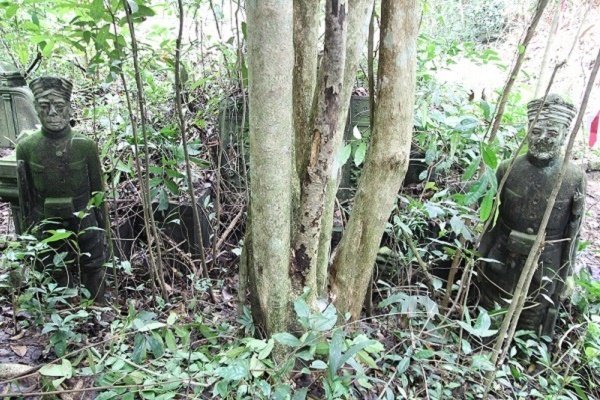
The biggest enemy of the graves is neither tomb raiders nor the weather, but tree roots. Many graves have been badly damaged by tree roots. There are even trees growing directly out of some graves. A testimony to nature’s carbon cycle.
Bukit Brown is not a national park, and the flora in the area is not maintained by the National Environment Agency (NEA). There are quite a few deadfalls in the area. When exploring the cemetery, keep a lookout for falling trees and branches, especially after rain.
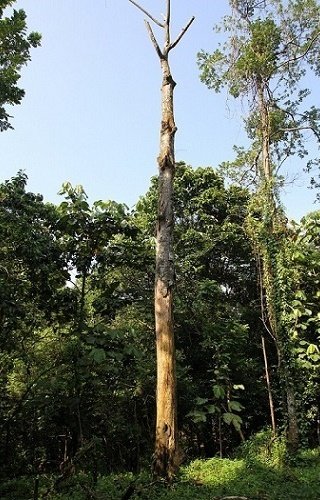
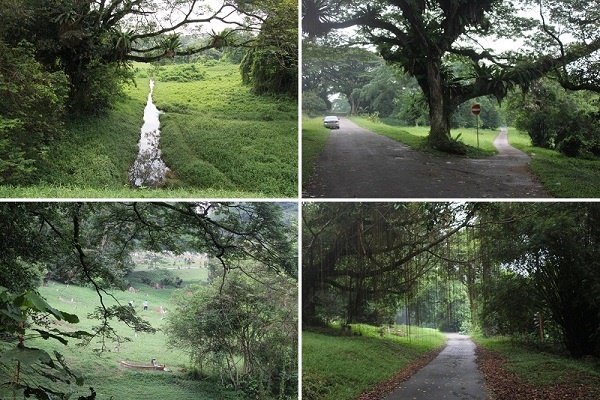
There are also some nice streams flowing through Bukit Brown. With the redevelopment of the area, these streams may eventually be converted into concrete canals.
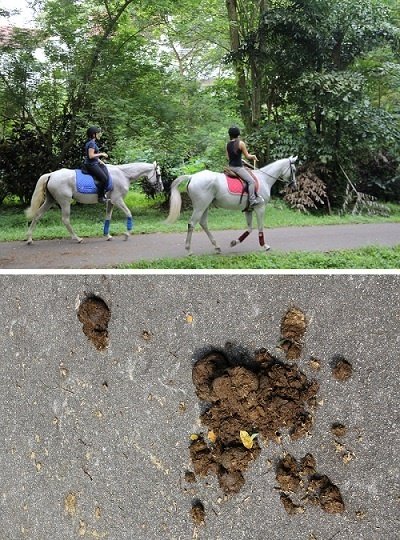
It is common to see horse dung along the trails. The Singapore Polo Club is located just beside Bukit Brown and riders frequently use the trails for strolling.
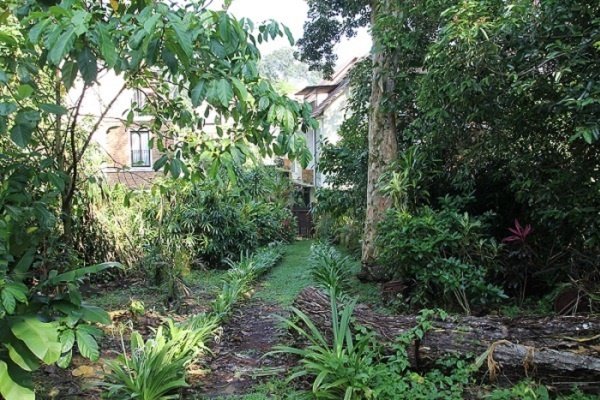
There are many private terrace houses around the fringe of Bukit Brown. The one above is less than 10 metres away from the trail. Imagine having a garden of tombstones in your backyard.
Future of Bukit Brown
A new dual four-lane road will be constructed across Bukit Brown Cemetery to alleviate the congestion currently experienced along Lornie Road and the Pan-Island Expressway (PIE) during peak hours, and to cater to expected growth in traffic.
This new road will feature a vehicular bridge that will run for nearly a third of its 2 km length. The 670 m vehicular bridge, which will run over existing creeks in the area, will minimise the “impact to the existing terrain and surrounding environment”, while allowing wildlife to move beneath it.
A total of 3,746 graves, or about 5 per cent of the total graves, will be exhumed to make way for the road. Construction of the road is expected to be completed by 2016.
Near the cemetery at Jalan Mashor is the Bukit Brown MRT Station, which is part of the MRT Circle Line. It is actually only a “shell station”, which can be completed when further development in the area warrants the operation of the station.
As early as the 1990s, Bukit Brown had already been earmarked by URA for housing. The cemetery occupies prime land that could one day house 15,000 flats for some 50,000 residents, equivalent to about 40 per cent of the population of Toa Payoh township.
A number of conservationist and environmental groups are actively lobbying for these development plans to be shelved. In view of Singapore’s scarce land and rapid population growth, however, these lobbying efforts are unlikely to result in any significant compromise by the government.
How to get there
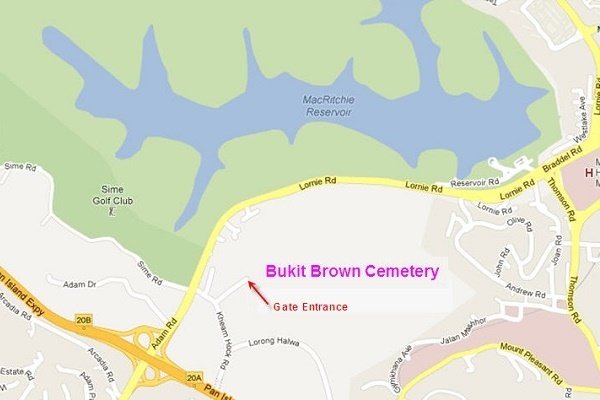
Bus services available: 52, 74, 93, 157, 165, 852, 855.
By MRT and Bus : From North: Go to Marymount MRT and walk to bus-stop #53019 along Upper Thomson Road. Take Buses 52, 74, 165, 852, 855 Alight 6 stops later at bus-stop, #41149, opposite Singapore Island Country Club (SICC), Adam Road. Walk towards Sime Road in the direction of Kheam Hock Road until you see Lorong Halwa.
From South: Go to Botanic Gardens MRT and walk to bus-stop #41121 at Adam Road, in front of Singapore Bible College. Take Buses 74, 93, 157, 165, 852, 855 Alight 2 stops later at bus-stop, #41141, before Singapore Island Country Club (SICC), Adam Road. Cross the bridge and walk towards Sime Road in the direction of Kheam Hock Road until you see Lorong Halwa.